
What Do Chiropractors Do to Treat Shoulder Pain?
Shoulder pain can make simple things—reaching into a cabinet, getting dressed, tossing a ball with your kids—unexpectedly hard. Here in Omaha, we see shoulder problems in desk workers, athletes, parents, and weekend gardeners alike. If you’ve wondered what a chiropractor actually does to help shoulder pain, you’re in the right place. At Powers Chiropractic, we use a precise, hands-on approach to restore joint motion, calm irritated tissues, and guide you back to confident, pain-free movement.
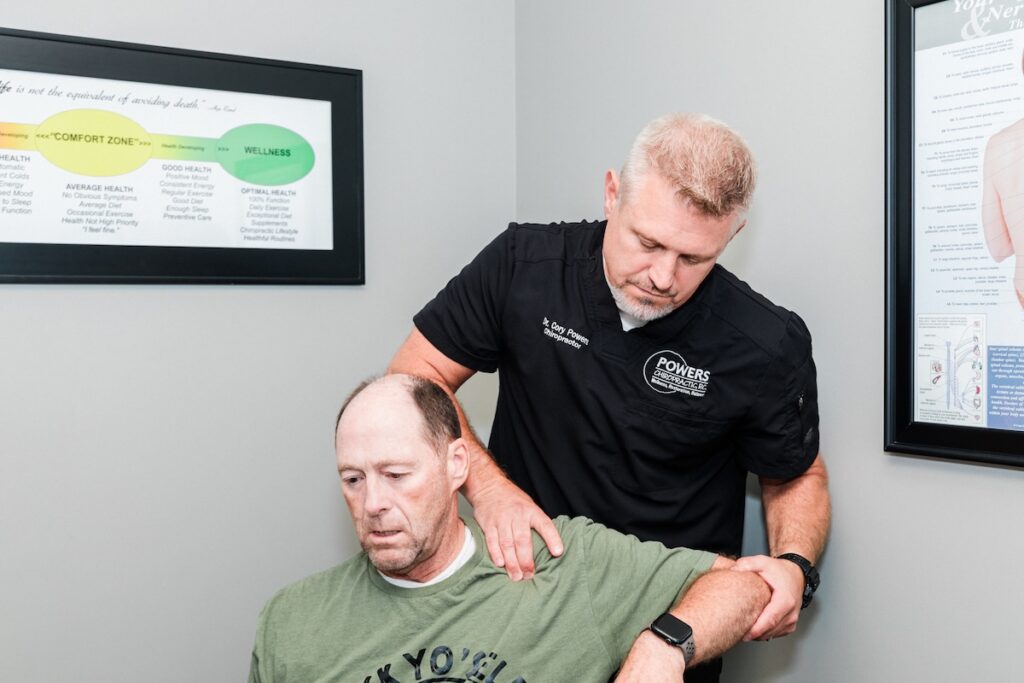
What do chiropractors do to treat shoulder pain? Chiropractors evaluate how the shoulder, shoulder blade, neck, and mid-back move together, then use targeted adjustments, joint mobilization, soft-tissue care, and corrective exercises to restore healthy motion and reduce pain. We also coach you on posture, ergonomics, and activity progressions so your improvements last.
Table of Contents
- Understanding Shoulder Pain: Why It Happens and What It Feels Like
- Common Causes We See in Omaha
- How the Spine Influences the Shoulder
- How Chiropractors Treat Shoulder Pain at Powers Chiropractic
- What to Expect at Your First Visit
- Practical Ways to Help Your Shoulder at Home
- When to See a Chiropractor (and Red Flags)
- Myths and Facts About Chiropractic Shoulder Care
- Local, Compassionate Care in Omaha
Understanding Shoulder Pain: Why It Happens and What It Feels Like
The shoulder is the most mobile joint in your body. That freedom of movement is great for reaching, lifting, and throwing, but it also means the shoulder relies on many moving parts working together: the ball-and-socket joint, the collarbone and AC joint, the shoulder blade, and the way your neck and mid-back position everything.
When even one piece stops moving well, the shoulder often gets overloaded. The result can be sharp pinching with overhead motion, a deep ache at rest, stiffness, catching or clicking, or pain that shows up after a long workday.
Common Causes We See in Omaha
At Powers Chiropractic, we frequently help patients with mechanical shoulder pain—issues related to joint motion, soft tissues, and movement patterns. Common culprits include:
- Rotator cuff irritation or tendinopathy: These small stabilizing muscles keep the shoulder centered. When they’re overworked or under-supported, you may feel aching on the outer shoulder or weakness with lifting.
- Impingement and bursitis: When the shoulder blade or upper arm bone moves poorly, soft tissues can get pinched during overhead motion, causing sharp pain, especially when reaching or sleeping on that side.
- AC joint strain: The joint at the tip of your shoulder can get irritated by falls, lifting, or repetitive pressure.
- Posture-related pain: Rounded shoulders and a stiff mid-back increase strain on the shoulder with desk work, driving, or phone use.
- Referred pain from the neck or upper ribs: Nerve irritation or joint restriction in the neck or upper back can be felt in the shoulder region.
- Adhesive capsulitis (frozen shoulder): This is a stiff, painful condition that limits shoulder motion. Early identification and movement strategies are key; chiropractic care focuses on restoring joint and regional mobility within comfort and tolerance.
How the Spine Influences the Shoulder
Your shoulder doesn’t work alone. The shoulder blade rides on your ribcage, and your neck and mid-back set the stage for how the shoulder moves. When the thoracic spine is stiff, the shoulder blade can’t tilt and rotate properly. When the neck is irritated, nerves that serve the shoulder may become sensitive, leading to pain and altered muscle control.
That’s why chiropractors don’t just treat the painful spot—we assess the entire chain. Aligning and mobilizing the neck and mid-back often reduces strain on the shoulder itself and improves the quality of shoulder motion.
How Chiropractors Treat Shoulder Pain at Powers Chiropractic
Chiropractic care is a frontline, non-invasive way to resolve many forms of shoulder pain. Our approach is hands-on, movement-focused, and tailored to you. Here’s how we commonly help:
- Thorough evaluation: We take a detailed history, then assess shoulder range of motion, muscle strength and control, shoulder blade mechanics, and the mobility of your neck, mid-back, and ribs. Orthopedic and neurologic tests help us pinpoint the source of pain. If imaging is needed to clarify a suspected fracture, dislocation, or other concern, we’ll coordinate that promptly.
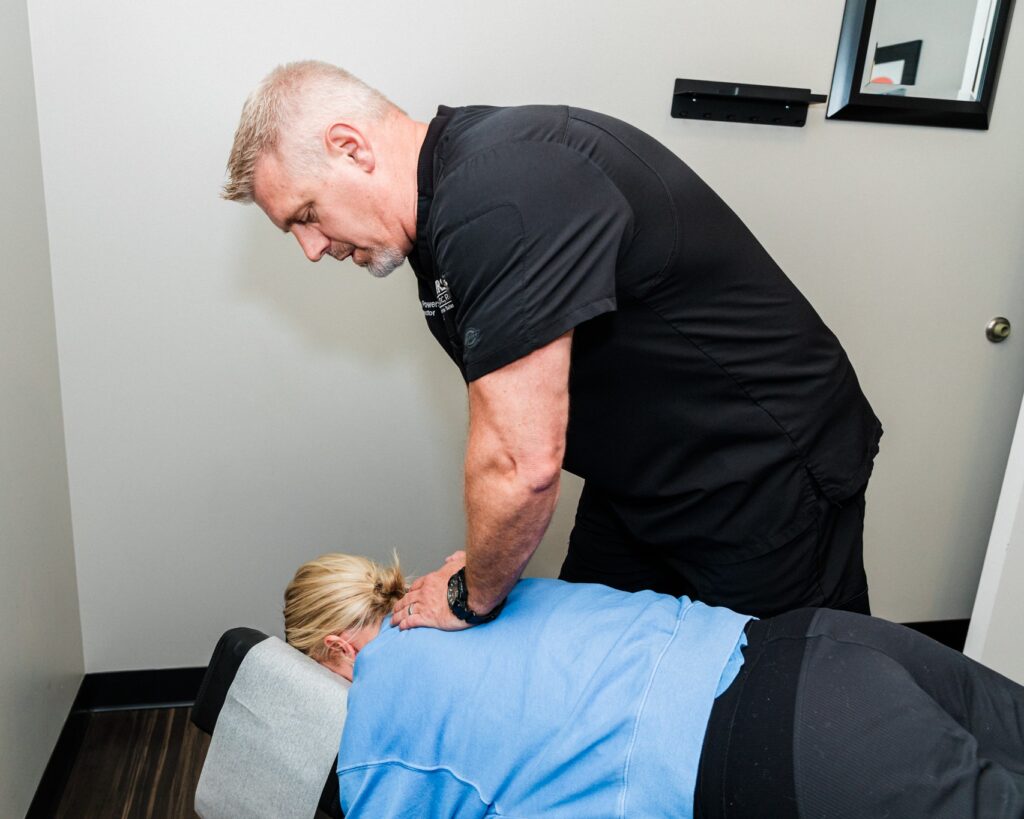
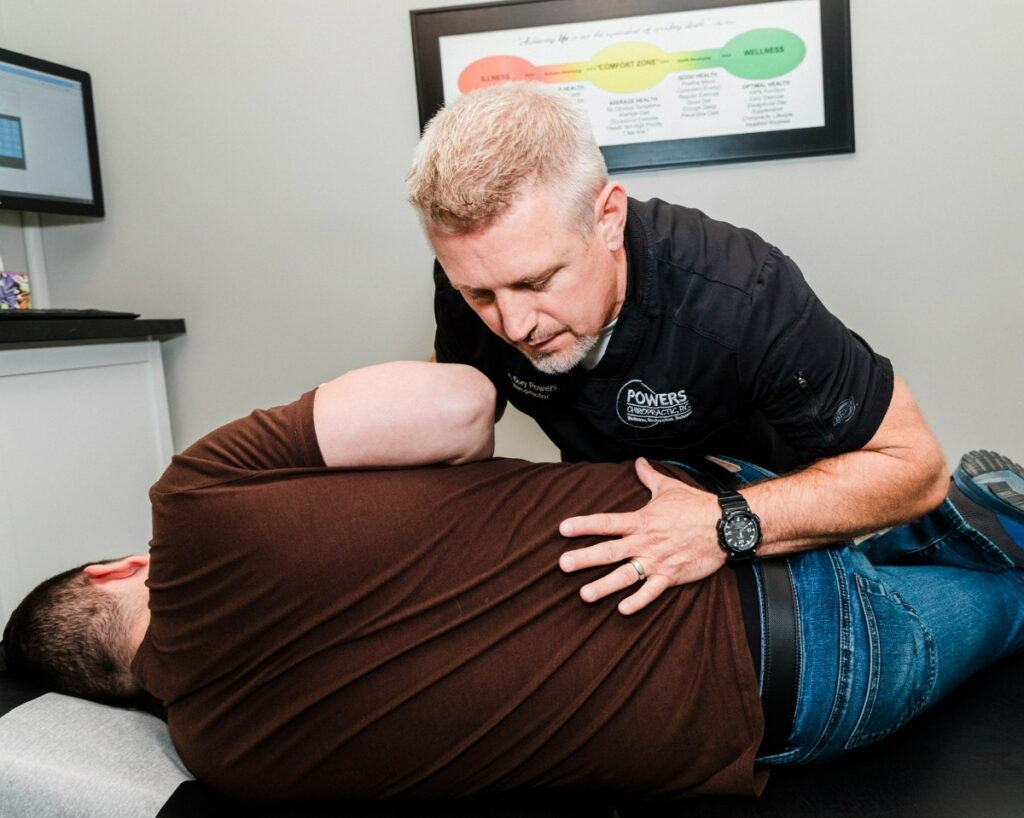
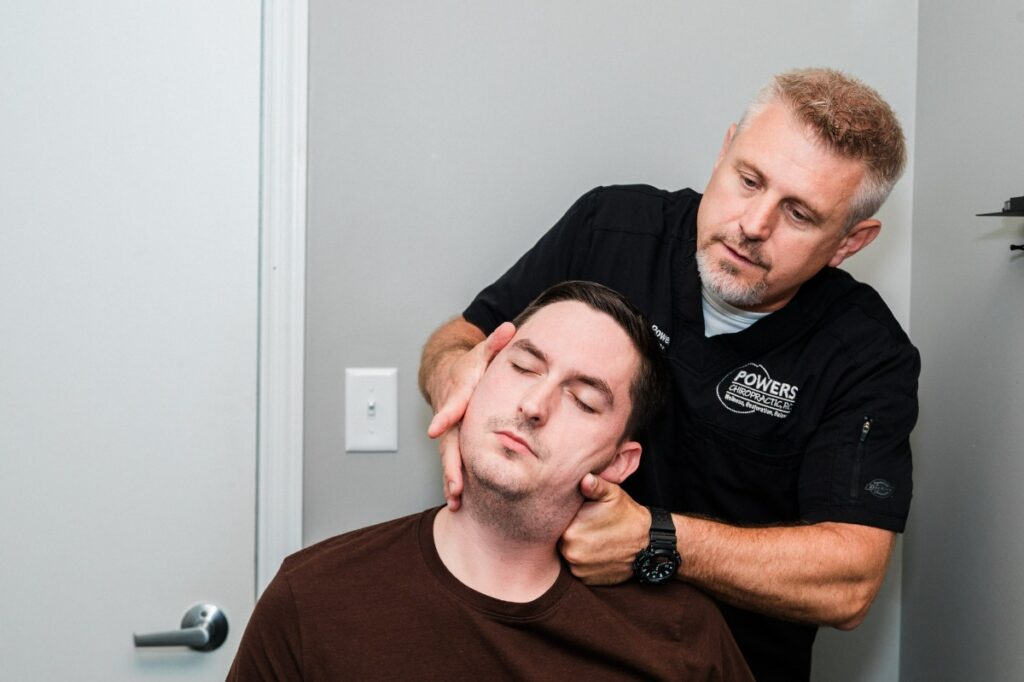
- Precise chiropractic adjustments: Gentle, targeted adjustments restore motion to restricted joints in the neck, mid-back, ribs, and shoulder complex. This can reduce mechanical irritation, improve movement patterns, and decrease pain.
- Joint mobilization for the shoulder and shoulder blade: We use graded, comfortable mobilizations to improve how the ball-and-socket joint glides and how the shoulder blade moves on the ribcage.
- Soft-tissue care: Techniques such as myofascial release and trigger point work help calm tight, overworked muscles like the pecs, upper traps, and rotator cuff. This reduces guarding and allows healthier motion.
- Targeted rehabilitation: We build simple, effective exercises to strengthen the rotator cuff and improve shoulder blade stability. Early on, these focus on control and pain-free motion; as you improve, we progress to stronger, more functional movements.
- Posture and ergonomic coaching: Small changes at your desk, in your car, or with your phone can take pressure off your shoulder and neck. We’ll help you set up your space and your daily habits for success.
- Kinesiology taping and activity guidance: Strategic taping can support posture and reduce strain during activity. We’ll also give you a gradual plan back to work, sports, lifting, and overhead tasks so you recover with confidence.
| Common Shoulder Issue | Chiropractic Focus at Powers Chiropractic |
|---|---|
| Rotator cuff irritation | Restore neck/thoracic mobility; mobilize shoulder; soft-tissue care; progressive cuff and scapular stabilization |
| Impingement/bursitis | Improve shoulder blade mechanics; thoracic/rib adjustments; controlled overhead progressions |
| AC joint strain | Gentle joint support; reduce regional restrictions; graded loading without provocation |
| Posture-related pain | Spinal alignment, ergonomic coaching, endurance-based postural training |
| Referred pain from neck | Cervical adjustments/mobilization; nerve-friendly movement; symptom-guided exercise |
What to Expect at Your First Visit
We begin with a conversation about your pain, daily activities, and goals. Then we perform a focused exam to identify which joints are restricted, which muscles are overworking, and which movements provoke or ease your symptoms. You’ll receive care on day one when appropriate—often including gentle adjustments, mobilization, and soft-tissue work—plus a clear plan you can follow at home. We’ll outline a realistic timeline and check in on your progress each visit.
Practical Ways to Help Your Shoulder at Home
- Optimize your workstation: Set your screen at eye level, keep elbows by your sides, and relax your shoulders—not shrugged. Take brief movement breaks every 30–60 minutes to roll your shoulders, gently extend your mid-back, and open your chest.
- Support sleep posture: Avoid lying directly on the painful shoulder. Side sleepers do best with a supportive pillow that keeps the neck level and a small pillow hugged in front of the body to keep the shoulder neutral. Back sleepers can use a small pillow under the arm of the irritated side.
- Warm up before overhead tasks: A couple of minutes of shoulder blade squeezes, gentle arm circles, and mid-back mobility work can ease strain when doing yardwork, lifting, or throwing.
- Progress activity gradually: Start with pain-free ranges, keep reps low, and build gradually. If something causes a sharp pinch, modify the range or reposition your shoulder blade by thinking “chest tall, shoulder blades down and back—gently.”
When to See a Chiropractor (and Red Flags)
Chiropractic care is appropriate for most mechanical shoulder problems, especially when pain is limiting daily life, when motion feels “stuck,” or when symptoms keep returning. If shoulder pain persists beyond a few days, interferes with sleep, or limits overhead use, a timely evaluation helps you avoid compensations that can make things worse.
- Seek urgent medical attention (not chiropractic first) if you have a fall or trauma with deformity or suspected fracture; sudden, severe swelling; signs of infection (fever, redness, warmth); chest pain or shortness of breath; or new, profound weakness or numbness in the arm.
At Powers Chiropractic, we perform a thorough assessment on your first visit. If we find anything that requires medical imaging or co-management, we’ll coordinate that promptly. Your safety comes first.
Myths and Facts About Chiropractic Shoulder Care
- Myth: “Shoulder pain is always a rotator cuff tear.”
- Fact: Many shoulder issues are movement-related problems that respond well to conservative chiropractic care focused on joint motion and muscle control.
- Myth: “If it hurts, rest completely.”
- Fact: Total rest can stiffen the shoulder. Strategic, pain-free movement—guided by a chiropractor—usually helps you recover faster and safer.
- Myth: “Chiropractors only treat backs and necks.”
- Fact: Chiropractors are trained to evaluate and treat the entire musculoskeletal system, including shoulders, hips, knees, and more.
- Myth: “If I need imaging, I shouldn’t see a chiropractor.”
- Fact: We know when imaging is appropriate and coordinate it when needed. Most mechanical shoulder issues can be evaluated and safely treated without imaging first.
Local, Compassionate Care in Omaha
Omaha is an active city—from youth sports and backyard projects to long workdays at a screen. At Powers Chiropractic, we’re here to keep you moving with less pain and more confidence. If shoulder discomfort is getting in your way, you don’t have to wait it out. A precise, hands-on chiropractic plan can help you feel and function better, often sooner than you think.
FAQs
What causes shoulder pain to flare up at night?
Common reasons include inflammation from daytime use, sleeping directly on the irritated side, or poor shoulder blade support. Adjusting sleep position and improving shoulder mechanics during the day often reduces night pain.
Can a chiropractor help a rotator cuff problem?
Yes—many rotator cuff issues are related to motion restrictions and muscle imbalance. Chiropractic care focuses on restoring joint mobility, improving shoulder blade control, reducing soft-tissue tension, and guiding progressive strengthening.
How long does it take to feel better?
Timelines vary based on the cause and how long you’ve had symptoms. Many patients notice early improvements within a few visits, with steady gains as we address mobility, control, and daily habits. Your chiropractor will outline a plan specific to your situation.
Do I need an MRI before starting care?
Usually not. Most mechanical shoulder problems can be safely evaluated and treated without advanced imaging. If your exam suggests a condition that requires imaging, we’ll coordinate it.
Is chiropractic safe for shoulder pain?
Chiropractic care is considered safe for most people when provided by a licensed chiropractor following a thorough evaluation. We tailor techniques to your comfort and refer out when needed.
Do I have to stop working out?
Often, no. We’ll help you modify movements to keep training safely, then progress back to full activities as pain decreases and control improves.
TL;DR
- Chiropractors treat shoulder pain by restoring joint motion, improving shoulder blade and spinal mechanics, easing soft-tissue tension, and guiding targeted rehab.
- Common issues include rotator cuff irritation, impingement, posture-related pain, and referred pain from the neck—often improved with conservative chiropractic care.
- Early evaluation helps prevent stiffness and compensation patterns that prolong pain.
- Seek urgent medical care for trauma with deformity, signs of infection, severe swelling, chest pain, or profound new weakness or numbness.
- In Omaha, Powers Chiropractic provides precise, hands-on care and a clear plan to help you move comfortably again.