
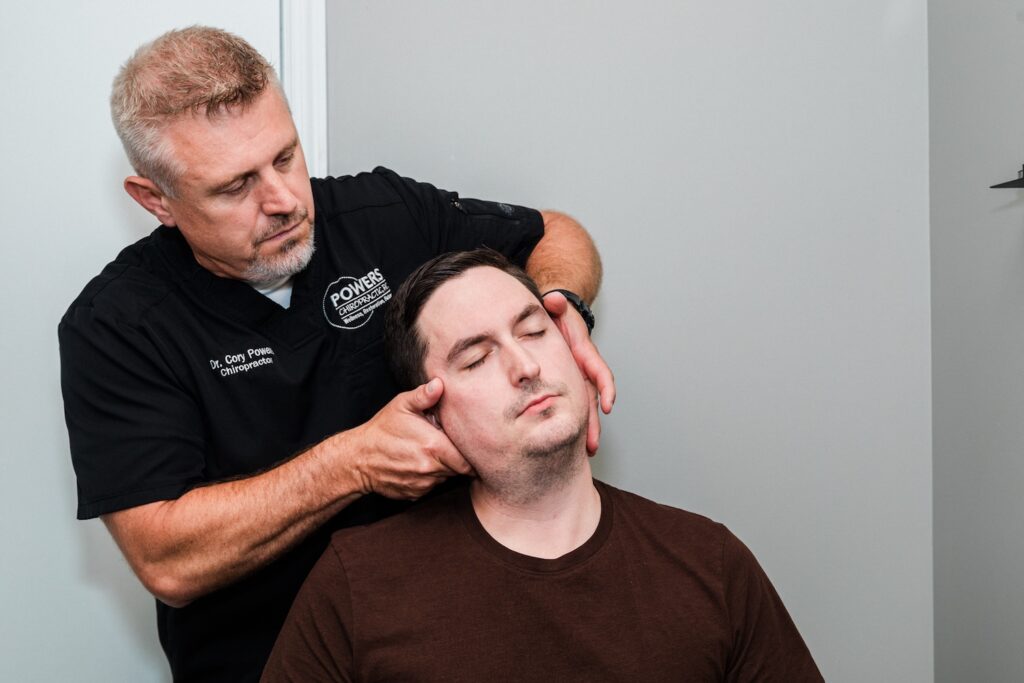

At Powers Chiropractic in Omaha, we see a growing number of patients with tight, achy necks and headaches linked to time spent looking down at phones and tablets. You’ve probably heard the term “text neck.” It’s more than a buzzword—it describes a real, fixable strain pattern in the neck and upper back that can affect how you feel at work, at school, and during daily life. In this article, you’ll learn what text neck is, why it happens, what signs to watch for, and how chiropractic care provides a frontline, noninvasive solution to address the problem at its source.
What is “text neck”? Text neck (also called tech neck) is the neck and upper back strain that develops from repeatedly looking down at a screen. It’s essentially a form of forward head posture that puts extra stress on the joints, discs, muscles, and nerves of the cervical spine.
Table of Contents
What Is Text Neck?
Text neck is a modern posture problem where the head drifts forward and the neck bends down for long periods when using phones, tablets, or laptops. Over time, this sustained position overloads the cervical spine (the neck portion of your spine), irritates soft tissues, and can limit normal movement. Even teenagers and kids are experiencing it now that screens are part of daily life.
Why This Matters for Your Neck and Spine
Your head is designed to sit over your shoulders, supported by a natural forward curve in the neck. When the head shifts forward—even by an inch or two—the workload on neck joints and muscles increases. Over weeks or months, that can lead to stiffness, tension headaches, shoulder discomfort, and a feeling that your neck is always “tight.”
Left unaddressed, text neck can change how you move and how your spine functions. Joints may become restricted, muscles can become imbalanced, and nerves may become irritated. That combination can sap your energy and focus, make workouts less enjoyable, and turn a normal workday into a sore one.
The Biomechanics of Looking Down (Explained Simply)
The cervical spine is built to be mobile and balanced. When you look straight ahead, your head rests over your shoulders like a well-centered bowling ball on a post. When you look down at a steep angle for long periods, the load shifts forward. The small joints in your neck jam in some areas and get overstretched in others. Muscles in the front of your neck and chest can tighten, while those between your shoulder blades and along the back of your neck have to work overtime.
The result? A pattern of forward head posture. It may start as a habit you only notice at the end of the day, but it can quickly become your default posture. The good news is that posture is trainable—and your spine responds very well to the right adjustments, mobility work, and daily position changes.
Common Signs You May Have Text Neck
- Neck stiffness or soreness that worsens after time on your phone, tablet, or laptop
- Tension or pressure at the base of the skull, often leading to headaches
- Tight upper back and shoulders, with tenderness between the shoulder blades
- Reduced ability to turn or tilt your head comfortably
- Occasional arm or hand tingling related to postural strain (seek a professional evaluation)
Everyday Triggers Around Omaha
Here in Omaha, we see text neck show up in a few predictable ways: long school days followed by homework on a tablet; remote or hybrid work on a laptop at the kitchen table; scrolling on the couch at night; and catching up on emails during kids’ activities or while waiting in line. Even fitness enthusiasts can aggravate it by staring down at a phone for music or workout tracking between sets.
Weather can play a part, too. Cold, windy days often make people hunch their shoulders and tuck their chin. When that becomes a habit—combined with screen time—it amplifies neck strain.
How Chiropractic Care at Powers Chiropractic Helps
Chiropractic is a frontline, noninvasive solution for text neck because it addresses the problem at its source: the way your spine moves and holds posture. At Powers Chiropractic, we focus first on a thorough evaluation—looking at your alignment, joint motion, muscle balance, and daily habits. From there, we create a personalized plan centered on chiropractic adjustments with supportive strategies to help you move and feel better, faster.
What a typical plan may include:
- Precise chiropractic adjustments to restore healthy motion in the cervical and upper thoracic spine. When joints move the way they’re meant to, muscles can relax and posture becomes easier to maintain without constant effort.
- Soft-tissue work and mobility guidance to reduce trigger points, improve flexibility in the chest and front of the neck, and activate the stabilizing muscles between the shoulder blades. This helps rebalance the system so your head naturally centers over your shoulders.
- Posture coaching and screen ergonomics tailored to your actual day. We’ll help you set up your desk, adjust your car seat, and use your phone or tablet in positions that protect your neck. Small changes, repeated consistently, deliver big results.
- Progress tracking so you can see improvements in range of motion, posture, and pain levels. Patients are often surprised how quickly their neck “unlocks” when the spine is moving well and daily habits support the change.
Chiropractic care is not an add-on here—it’s the primary, foundational approach. Our goal is to correct the root cause, reduce strain on the cervical spine, and help you build sustainable posture patterns for the long run.
Simple At-Home Strategies to Reduce Text Neck
Text neck improves with consistent, doable changes. These habits are safe for most people and pair well with chiropractic care to speed progress and prevent flare-ups.
- Lift the screen: Bring your phone or tablet up toward eye level, rather than bending your head down toward your lap.
- Break the “scroll hold”: Every 20–30 minutes, look up, roll your shoulders, and gently move your neck through its range (chin tuck, rotate side to side, slow nods).
- Set up your workstation: Position the top of your monitor near eye height, keep the keyboard close, and sit so your hips are slightly higher than your knees.
- Support your spine when you relax: If you read or scroll on the couch, place a pillow behind your mid-back and keep the screen higher, not in your lap.
- Keep your shoulders down and back: Think “long neck, wide collarbones.” This cue helps prevent hunching.
- Move more: Take short standing or walking breaks. Movement “washes out” the stress that builds up during screen time.
When to See a Chiropractor in Omaha
If neck stiffness, headaches, or shoulder tension keep returning despite your best efforts, it’s time for a professional evaluation. Additionally, consider scheduling if you notice your head consistently juts forward in photos, if you struggle to rotate your neck while driving, or if screen days reliably end in pain. Early care can prevent a minor posture issue from becoming a daily limitation.
Chiropractic is well-suited as a first step for these issues. Our evaluation identifies the specific joints and muscles involved, and our care plan aims to restore motion, reduce irritation, and create posture that holds up to your day—at work, at school, and on the go.
When to Seek Medical Care Urgently
While text neck is common and typically responds well to conservative chiropractic care, certain symptoms require prompt medical attention. Seek urgent medical evaluation if you experience severe trauma, sudden and intense neck pain with fever or severe headache, progressive arm or hand weakness, loss of coordination, significant numbness, or changes in bladder or bowel control. If you’re unsure, call our office—we’ll help you determine the most appropriate next step and coordinate a referral when needed. Chiropractic is not emergency care.
Myths vs. Facts About Text Neck
| Myth | Fact |
|---|---|
| “Text neck is just part of modern life—nothing you can do.” | Habits and alignment can change. With targeted chiropractic care and simple daily adjustments, most people see meaningful improvement. |
| “If I stretch once in a while, it will go away.” | Stretching helps, but restoring joint motion and retraining posture are key. Consistency matters more than occasional long sessions. |
| “Only older adults get posture problems.” | Kids, teens, and adults can all develop forward head posture from screens. Early attention prevents long-term patterns. |
| “Pain is the only sign of text neck.” | Stiffness, fatigue, headaches, and limited range of motion often show up before constant pain does. |
Final Thoughts for Our Omaha Community
Whether you’re a student, a remote worker, a busy parent, or a weekend athlete, text neck can chip away at your comfort and productivity. The encouraging news: your neck and upper back are designed to adapt. With precise chiropractic adjustments and day-to-day changes, you can reset your posture and protect your spine for the long term.
If you’re in Omaha and noticing the signs, our team at Powers Chiropractic is here to help you feel and move your best. We’ll meet you where you are, build a clear plan, and support you step by step.
FAQs
Is text neck a real condition?
Yes. “Text neck” is a common term for forward head posture and neck strain from sustained screen use. It’s not a disease, but it describes a very real pattern of stress on the cervical spine.
Can chiropractic care help with tech neck?
Chiropractic care focuses on restoring proper joint motion, improving posture mechanics, and reducing muscle tension. Many patients report better mobility and less pain when these underlying issues are addressed.
How long does it take to feel improvement?
Timeframes vary. Some patients notice relief within a few visits, while others need a longer plan based on how long the issue has been present and daily screen habits.
What’s the best posture for using a phone?
Keep the screen closer to eye level, shoulders relaxed and down, and your head balanced over your shoulders. Take brief movement breaks every 20–30 minutes.
Can kids get text neck?
Yes. We see it in children and teens due to schoolwork and screen time. Early guidance helps protect healthy development and prevents ingrained habits.
TL;DR
- Text neck comes from looking down at screens, creating forward head posture and neck strain.
- It can cause stiffness, headaches, shoulder tension, and reduced range of motion.
- Chiropractic care is a frontline, noninvasive way to restore motion, relieve irritation, and retrain posture.
- Lift your screen, take frequent micro-breaks, and set up your workstation to support your neck.
- Seek urgent medical care for red flags like severe trauma, progressive weakness, or changes in bladder/bowel control.