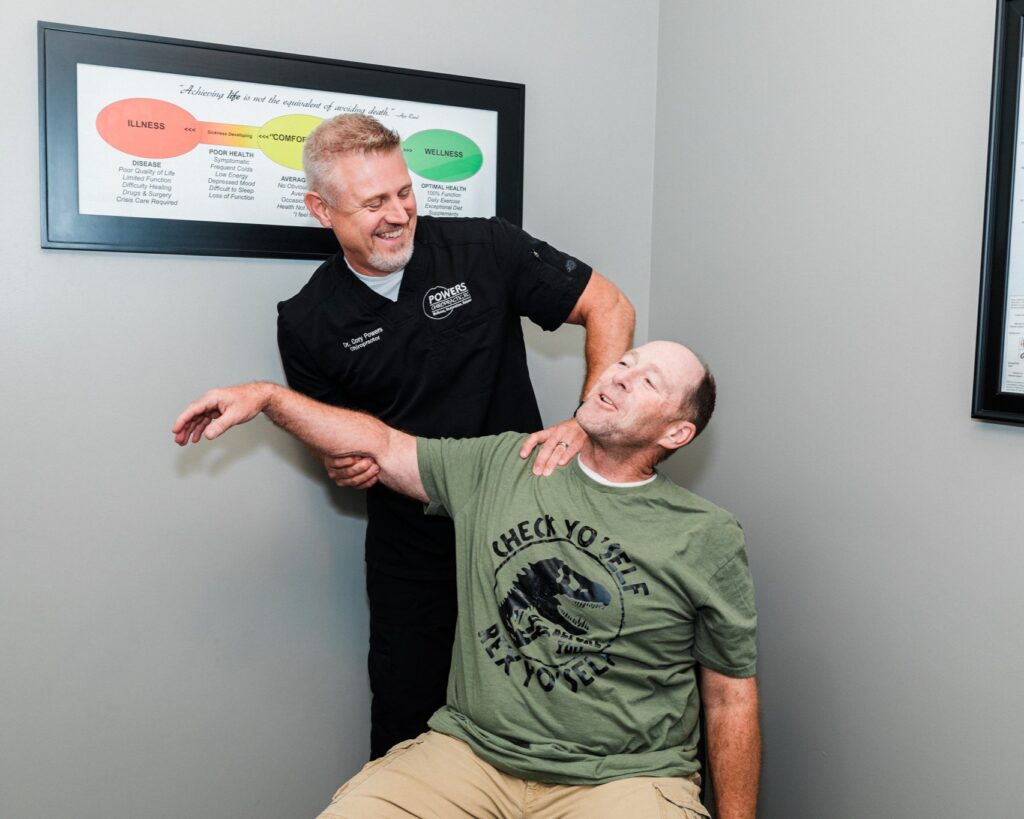

Shoulder pain has a way of sneaking into every part of your daily life. Whether you’re reaching for something on a high shelf, trying to get a good night’s sleep, or simply lifting a bag of groceries, a rotator cuff injury can turn ordinary movements into genuinely painful experiences. Here in Omaha, NE, many patients come through the doors at Powers Chiropractic describing exactly that kind of nagging, limiting shoulder discomfort — and more often than not, the rotator cuff is at the center of it. Understanding what’s actually happening in your shoulder is the first step toward feeling better, and that’s exactly what this article is here to help you do.
What Is a Rotator Cuff Injury?
A rotator cuff injury refers to damage or irritation to the group of four muscles and their tendons that stabilize the shoulder joint. These muscles work together to keep the ball of your upper arm firmly seated within the socket of your shoulder blade. When one or more of these structures becomes strained, inflamed, or torn, it can cause pain, weakness, and a reduced range of motion in the shoulder.
- What Is the Rotator Cuff and Why Does It Matter?
- Common Causes of Rotator Cuff Injuries
- Signs and Symptoms to Watch For
- How Chiropractic Care Fits Into Shoulder Recovery
- Practical Tips for Supporting Your Shoulder Health
- When to See a Chiropractor for Shoulder Pain
- Rotator Cuff Injury: Symptoms vs. Common Triggers
- Myths vs. Facts About Rotator Cuff Injuries
- Final Thoughts from Powers Chiropractic
- Frequently Asked Questions
What Is the Rotator Cuff and Why Does It Matter?
The rotator cuff is made up of four muscles — the supraspinatus, infraspinatus, teres minor, and subscapularis. Together, they form a cuff of muscle and tendon tissue around the shoulder joint. Their primary job is to hold the humeral head (the ball at the top of your upper arm bone) in proper position within the glenoid (the socket in your shoulder blade) while allowing your arm to move in a wide range of directions.
This group of muscles is remarkably versatile. It helps you rotate your arm inward and outward, lift it overhead, and perform fine motor tasks like throwing, reaching, or pushing. Because the shoulder is one of the most mobile joints in the human body, the rotator cuff is under near-constant demand. That mobility comes with a trade-off — the shoulder sacrifices some structural stability in exchange for its impressive range of motion, which makes the rotator cuff vulnerable to both acute injuries and gradual wear over time.
When the rotator cuff isn’t functioning optimally, the mechanics of the entire shoulder are affected. Neighboring muscles often try to compensate, leading to tension in the neck, upper back, and even the elbow. This ripple effect is exactly why shoulder injuries rarely stay isolated — and why addressing the root cause matters so much.
Common Causes of Rotator Cuff Injuries
Rotator cuff injuries don’t always happen in a single dramatic moment. In fact, many of the patients Dr. Cory Powers sees at Powers Chiropractic in Omaha report that their shoulder pain crept up gradually, with no obvious single event to blame. There are generally two broad categories of rotator cuff injury: acute (sudden) and degenerative (gradual).
Acute injuries tend to result from a specific incident — a fall onto an outstretched arm, a sudden pulling or lifting force, or a direct impact to the shoulder. These are common in athletes, particularly those who play overhead sports like baseball, tennis, or volleyball, but they can happen to anyone at any age.
Degenerative injuries are far more common and develop over time through repetitive stress. Jobs or activities that require repeated overhead reaching or lifting — think painters, electricians, warehouse workers, or even desk workers with poor posture — place ongoing strain on the tendons of the rotator cuff. Over years, this repetitive demand can cause small tears, tendon inflammation (tendinitis), or fluid-filled sac irritation (bursitis) that slowly worsen if left unaddressed.
Age is also a significant factor. As we get older, the tendons of the rotator cuff naturally lose some elasticity and blood supply, making them more susceptible to damage. Reduced physical activity, postural changes over time, and previous shoulder injuries can all compound this risk. Here in Omaha, Dr. Cory Powers regularly works with patients across a wide age range — from young athletes to active seniors — all dealing with the varied presentations of rotator cuff dysfunction.
Signs and Symptoms to Watch For
Rotator cuff injuries can present in a variety of ways depending on which structure is affected and how severe the damage is. Some people experience sharp, immediate pain while others deal with a dull, persistent ache that worsens with certain movements.
One of the most commonly reported symptoms is pain when lifting the arm overhead or reaching across the body. Pain that radiates down the outer side of the upper arm is also typical, and many patients notice it’s worse at night — particularly when sleeping on the affected shoulder. This nighttime discomfort is actually one of the hallmark signs that brings many people into Powers Chiropractic looking for relief.
Weakness in the arm is another key symptom. You might notice that tasks requiring arm strength, like picking up a moderately heavy object, have become noticeably more difficult. A clicking, crackling, or grinding sensation during shoulder movement (known as crepitus) can also be present, though it’s worth noting that some degree of joint noise is normal and doesn’t always indicate injury.
In more significant cases, such as a full-thickness tear of a tendon, the shoulder may feel profoundly weak and movement may be severely limited. These cases warrant prompt evaluation, and Dr. Cory Powers at Powers Chiropractic in Omaha will always refer patients for imaging or medical evaluation when the clinical picture calls for it.
How Chiropractic Care Fits Into Shoulder Recovery
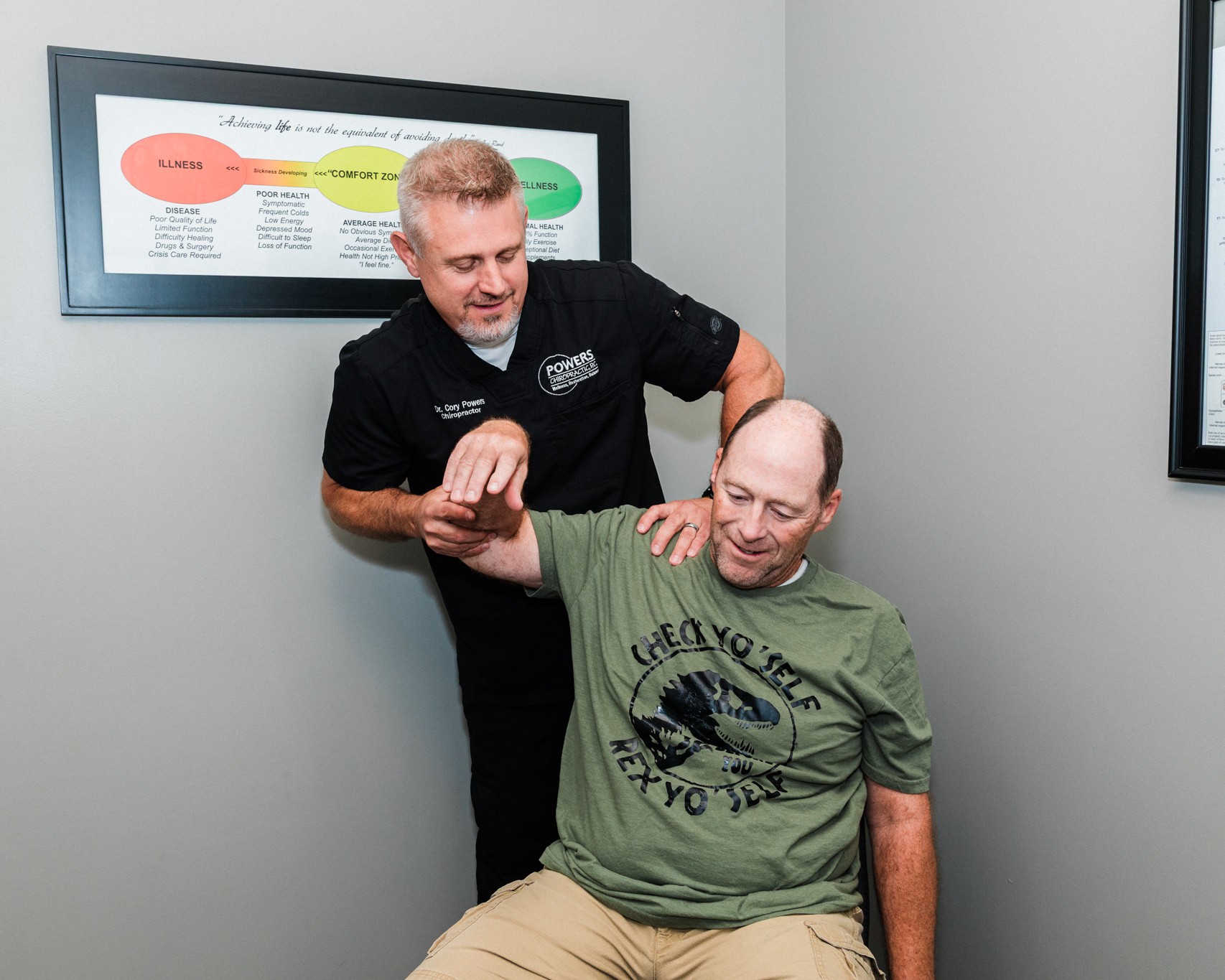
Chiropractic care offers a conservative, non-invasive approach to managing rotator cuff injuries that focuses on restoring function, reducing pain, and supporting the body’s natural healing process. It’s not a replacement for surgical intervention when that’s truly needed, but for many patients — especially those with partial tears, tendinitis, bursitis, or chronic overuse patterns — chiropractic care can be an effective part of the recovery journey.
One of the foundational principles of chiropractic care is addressing the whole musculoskeletal system, not just the site of pain. Dr. Cory Powers evaluates not only the shoulder itself but also the cervical spine (neck) and thoracic spine (mid-back), since dysfunction in these areas can directly influence shoulder mechanics. A stiff or misaligned mid-back, for example, can alter the position of the shoulder blade, which changes how the rotator cuff muscles function during movement. This broader perspective is one of the things that sets chiropractic care apart.
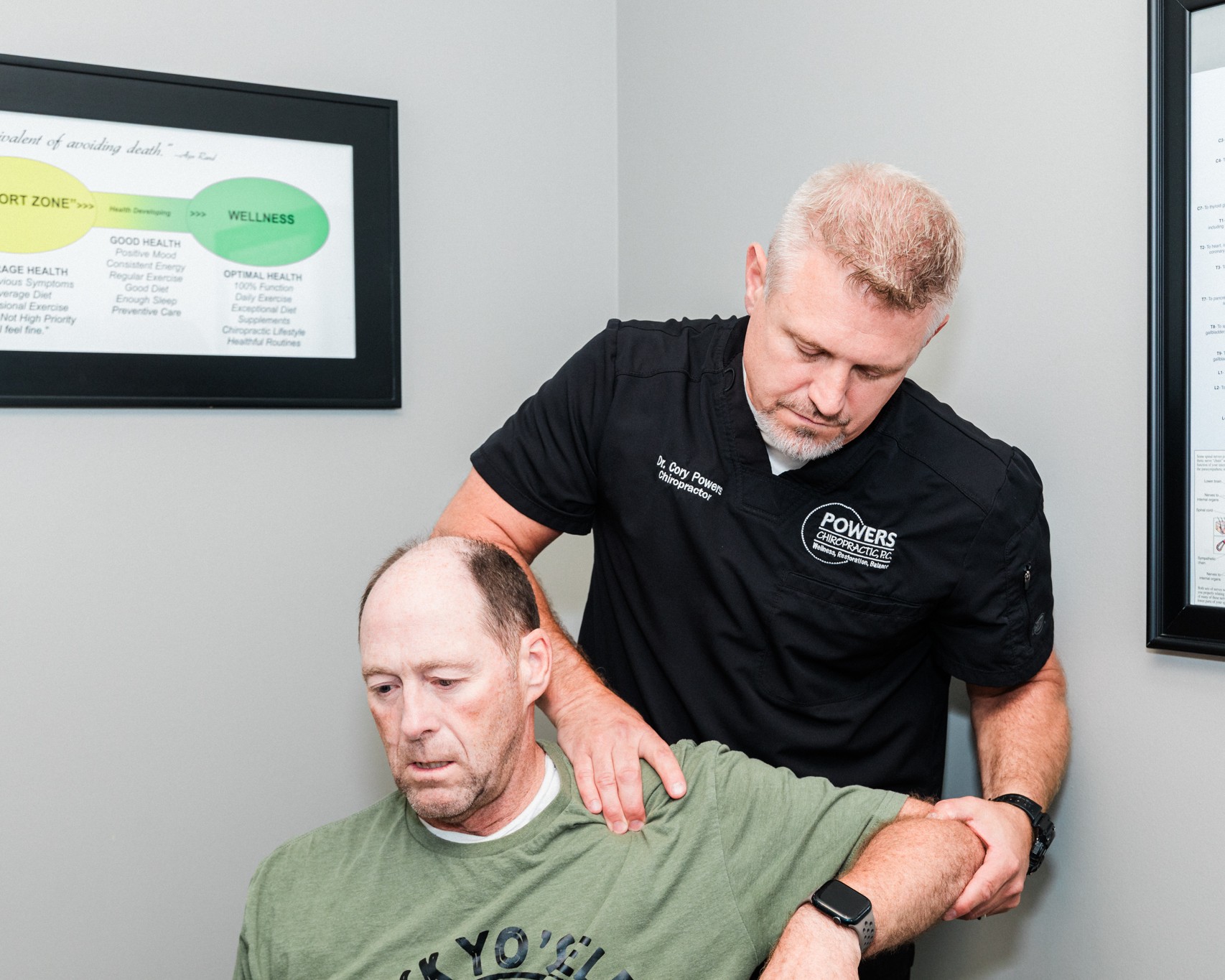
Chiropractic adjustments to the spine and, when appropriate, the shoulder joint itself can help restore proper joint mobility and reduce compensatory tension in surrounding muscles. Soft tissue techniques may be used to address muscle tightness and improve circulation to inflamed tendons. Rehabilitative guidance — including specific movement patterns and postural corrections — helps patients make lasting progress beyond the treatment room.
Evidence from organizations like the National Institutes of Health (NIH) and research published in conservative care literature indicates that manual therapy approaches can be helpful for shoulder pain and dysfunction. While results vary depending on the nature and severity of the injury, many patients experience meaningful improvement in pain levels, range of motion, and overall function through consistent chiropractic care. At Powers Chiropractic, care is always individualized — no two shoulders are the same, and treatment plans reflect that.
Practical Tips for Supporting Your Shoulder Health
While professional care is important for a true rotator cuff injury, there’s a great deal you can do in your daily life to support your shoulder’s recovery and long-term health. These tips are grounded in sound biomechanical principles and are safe for most people to follow — though it’s always a good idea to run any new activities by your provider if you’re currently dealing with an injury.
Posture is perhaps the most overlooked factor in shoulder health. When you slouch or round your shoulders forward — which is easy to do after hours at a desk or looking down at a phone — the shoulder blade tilts forward. This narrows the space in the shoulder joint and increases the likelihood of impingement and irritation to the rotator cuff tendons. Practicing upright posture, keeping your shoulders gently back and down, and being intentional about your seated position can genuinely make a difference over time.
Sleep position matters too. Sleeping directly on the affected shoulder compresses the tendons and bursa of the rotator cuff throughout the night. If you’re a side sleeper, try switching to your unaffected side or sleeping on your back with a pillow supporting your arm. Many patients find this alone reduces their morning pain significantly.
Avoid the temptation to completely stop using your shoulder. While rest is important in the acute phase, prolonged immobilization can lead to stiffness and further weakness. Gentle, pain-free movement — like pendulum swings where you let your arm hang and rock slowly — helps maintain circulation and range of motion without stressing the injured tissue.
When to See a Chiropractor for Shoulder Pain
A good rule of thumb is: if your shoulder pain has lasted more than a week or two, is interfering with sleep or daily activities, or is accompanied by noticeable weakness, it’s time to get it professionally evaluated. Waiting too long often means the surrounding muscles develop compensatory habits that make recovery more complex.
There are also certain red flags that should prompt immediate medical attention rather than a chiropractic visit. These include sudden, severe pain following a traumatic injury or fall, visible deformity of the shoulder, complete inability to move the arm, numbness or tingling that runs down the arm into the hand, or any shoulder pain accompanied by chest pain or shortness of breath. If any of these are present, seek emergency or urgent medical care right away.
For the vast majority of shoulder pain presentations, however, chiropractic care is a safe and appropriate first step. Dr. Cory Powers at Powers Chiropractic in Omaha takes a thorough approach to evaluating shoulder complaints — taking into account your history, your activity demands, and your goals — before recommending any course of care.
Rotator Cuff Injury: Symptoms vs. Common Triggers
| Symptom | Common Trigger or Associated Cause |
|---|---|
| Pain when lifting arm overhead | Tendon impingement, supraspinatus strain, repetitive overhead work |
| Nighttime shoulder pain / pain when sleeping on shoulder | Bursitis, tendinitis, rotator cuff tendon irritation |
| Weakness with pushing or pulling | Partial or full tendon tear, muscle inhibition from pain |
| Pain radiating down the outer arm | Rotator cuff strain, cervical nerve involvement, referred pain |
| Clicking or grinding sensation during shoulder movement | Scar tissue buildup, tendon fraying, bursitis, joint surface changes |
| Stiffness or limited range of motion | Prolonged disuse, adhesive capsulitis (frozen shoulder), guarding from pain |
Myths vs. Facts About Rotator Cuff Injuries
Myth: Rotator cuff injuries only happen to athletes or people who do heavy labor.
Fact: While athletes and manual laborers are certainly at higher risk, rotator cuff injuries are extremely common among everyday people. Desk workers, seniors with age-related tendon degeneration, and anyone who performs repetitive arm movements — even light ones — can develop rotator cuff problems over time. Here in Omaha, Powers Chiropractic sees patients from all walks of life dealing with this issue.
Myth: If you can still move your shoulder, the rotator cuff can’t be seriously injured.
Fact: This is a common misconception. Even partial or full-thickness tendon tears can still allow some degree of shoulder movement, especially if the surrounding muscles compensate. The presence of movement does not rule out significant injury. A thorough clinical evaluation — and sometimes imaging — is needed to understand the true extent of the damage.
Myth: Surgery is the only real solution for a rotator cuff injury.
Fact: Surgery is appropriate for some cases, particularly complete ruptures in younger, active patients. However, research suggests that many rotator cuff injuries — including partial tears and chronic tendinitis — respond well to conservative management, which includes chiropractic care, physical rehabilitation, and activity modification. Many patients achieve significant functional improvement without ever needing surgery.
Myth: Rest alone will heal a rotator cuff injury.
Fact: Rest can reduce acute inflammation and give irritated tissue time to calm down, but rest alone rarely resolves the underlying mechanical issues that led to the injury. Without addressing posture, movement patterns, muscle imbalances, and joint function, the same problem is likely to return. Active, guided recovery under professional supervision tends to produce better long-term outcomes than passive rest alone.
Myth: Shoulder pain that goes away on its own means the rotator cuff has healed completely.
Fact: Pain is not always a reliable indicator of tissue healing. Symptoms can subside as the body adapts or compensates, even when the underlying dysfunction remains. This is one reason why recurring shoulder problems are so common — the original issue was never fully resolved. If your shoulder pain keeps coming back, that’s a sign that something in the system still needs attention.
Final Thoughts from Powers Chiropractic
Shoulder pain — especially from a rotator cuff injury — can feel discouraging. It interrupts your sleep, limits your activities, and has a way of making you feel older than you are. But it’s also one of the most treatable musculoskeletal conditions when approached thoughtfully and early. The good news is that most people do not have to live with this kind of pain indefinitely.
At Powers Chiropractic in Omaha, NE, Dr. Cory Powers is committed to helping patients understand what’s happening in their bodies and empowering them with the knowledge and care they need to move forward. Whether you’re dealing with a new shoulder strain, a chronic overuse pattern, or lingering discomfort that just hasn’t gone away on its own, conservative chiropractic care may be an important part of your path back to full function.
You don’t have to keep pushing through the pain and hoping it resolves on its own. The Omaha community deserves access to clear answers and quality, individualized care — and that’s exactly what Powers Chiropractic aims to provide. If shoulder pain has been holding you back, reaching out is a simple first step worth taking.
Frequently Asked Questions
How do I know if my shoulder pain is from the rotator cuff or something else?
Rotator cuff pain typically presents as aching discomfort in the outer shoulder and upper arm, often worse with overhead movement and at night. However, shoulder pain can also come from the cervical spine, the acromioclavicular joint, or referred sources like the heart or diaphragm. A proper clinical evaluation is the best way to identify the true source of your pain.
Can chiropractic care help with a torn rotator cuff?
For partial tears, chiropractic care can be a helpful part of a conservative management plan by improving surrounding joint function, reducing compensatory tension, and supporting the body’s healing process. Full-thickness tears with significant functional loss may require surgical consultation. Dr. Cory Powers will assess your individual situation and refer out when appropriate.
How long does recovery from a rotator cuff injury typically take?
Recovery time varies widely depending on the severity of the injury, the patient’s age and activity level, and how consistently they follow their care plan. Minor strains and tendinitis may improve in a few weeks, while more significant injuries can take several months. Consistent care and adherence to rehabilitative guidance are key factors in a faster recovery.
Is it okay to exercise with a rotator cuff injury?
In many cases, gentle, guided movement is actually beneficial and helps prevent stiffness and muscle atrophy. However, exercises that cause pain or that load the injured structure should be avoided until cleared by a professional. Your chiropractor can help guide you toward movements that support recovery without causing further harm.
What makes rotator cuff injuries worse?
Continuing to perform repetitive overhead activities, sleeping on the affected shoulder, poor posture (especially rounded forward posture), and ignoring early symptoms are among the most common factors that worsen rotator cuff injuries. Early intervention and activity modification can significantly limit the progression of damage.
Do I need an MRI before seeing a chiropractor for shoulder pain?
An MRI is not typically required before your first chiropractic visit. A thorough clinical examination can provide a great deal of useful information and guide initial care decisions. If imaging is warranted based on your presentation, Dr. Cory Powers at Powers Chiropractic will recommend it and can coordinate with other providers as needed.
TL;DR Summary
- The rotator cuff is a group of four muscles and tendons that stabilize the shoulder and enable a wide range of arm movement — injuries to this area are extremely common and can affect people of all ages and activity levels.
- Rotator cuff injuries can be caused by a sudden event (like a fall) or develop gradually through repetitive overhead activity, aging, or poor posture over time.
- Key symptoms include shoulder pain with overhead movement, nighttime pain, arm weakness, and a clicking or grinding sensation in the shoulder joint.
- Chiropractic care offers a conservative, non-invasive approach to shoulder recovery that addresses not just the shoulder but also the spine and overall movement patterns — Dr. Cory Powers at Powers Chiropractic in Omaha, NE provides individualized care for exactly these types of complaints.
- Many rotator cuff injuries respond well to conservative management — surgery is not always necessary, and early intervention with professional guidance typically leads to the best outcomes.