
Back pain is one of those frustrating experiences that can quietly take over your life. One day you’re bending down to tie your shoes or picking up a grandchild, and the next, you’re wincing with every step. If that sounds familiar, you’re not alone — back pain is one of the most common reasons people seek healthcare, and here in Omaha, it’s something Dr. Cory Powers and the team at Powers Chiropractic see and treat every single day. The good news? Understanding what’s causing your back pain is the first step toward real, lasting relief — and that’s exactly what this article is here to help you do.
What is back pain, exactly?
Back pain refers to discomfort, stiffness, or soreness anywhere along the spine — from the base of your neck to your tailbone. It can range from a dull, constant ache to a sharp, sudden sensation that stops you in your tracks. It may stem from muscles, joints, nerves, discs, or a combination of all of the above.
What Causes Back Pain?
Back pain doesn’t usually come out of nowhere — even when it feels that way. In most cases, there’s an underlying issue that has been building for days, weeks, or even months before you finally feel it. Understanding the root causes is something Dr. Cory Powers is deeply committed to, because treating the cause is how you find lasting relief rather than just temporary comfort.
One of the most common causes of back pain is spinal joint dysfunction, sometimes called a subluxation in chiropractic terminology. This occurs when one or more of the joints along your spine aren’t moving the way they should. When a joint becomes restricted or misaligned, it can irritate the surrounding nerves, strain nearby muscles, and create that familiar, nagging ache that just won’t quit.
Muscle strain and ligament sprains are also extremely common, especially among active adults and those who do physical work. These soft tissue injuries can happen from lifting something heavy incorrectly, making a sudden awkward movement, or even sleeping in a poor position. The muscles and ligaments of the back are remarkably tough, but they have their limits — and when those limits are crossed, inflammation and pain follow quickly.
Disc-related issues are another significant contributor to back pain. The discs between your vertebrae act as shock absorbers. Over time — or with sudden injury — these discs can bulge, herniate, or degenerate, placing pressure on the surrounding nerves. This is often what creates that radiating pain down the leg that many people know as sciatica.
Finally, poor posture and prolonged sitting have become increasingly common culprits. In a world where so many of us spend hours at a desk or looking down at a phone, the spine endures a tremendous amount of ongoing stress. Over time, that stress accumulates and begins to cause real structural and muscular problems that show up as back pain.
Common Back Pain Triggers You Might Not Expect
Beyond the major structural causes, there are several everyday habits and situations that can trigger or worsen back pain. Many patients at Powers Chiropractic in Omaha are surprised to learn that some of their daily routines are contributing to their discomfort.
Sedentary lifestyle is a big one. When we’re not moving regularly, the muscles that support the spine become weak and deconditioned. Without that muscular support, the spine has to work harder — and that extra load leads to fatigue and pain.
Stress and tension also play a surprising role. When we’re stressed, our bodies tend to tighten up — especially in the neck, shoulders, and lower back. That chronic muscle tension, when left unaddressed, can evolve into persistent back pain over time.
Footwear and gait patterns are often overlooked, but the way you walk and the shoes you wear can significantly impact how load travels through your spine. Flat arches, unsupportive footwear, or a limping gait from an old injury can create uneven stress on the back that adds up over time.
Excess body weight — particularly around the midsection — can shift your center of gravity forward, placing additional stress on the lumbar spine. This doesn’t mean weight is always the cause, but it’s a factor that the whole body, including the back, feels.
How Back Pain Affects Your Daily Life
Back pain is rarely just a physical problem. It has a way of creeping into every corner of your life. At Powers Chiropractic, Dr. Cory Powers hears this from patients all the time — they come in not just because their back hurts, but because the pain has started to steal moments they care about deeply.
Maybe you’ve stopped going on walks with your spouse because the ache sets in after a block or two. Maybe you sit on the sidelines at your grandchildren’s soccer games instead of getting out there with them. Perhaps you’re waking up at 2 a.m. because no position feels comfortable anymore. These aren’t small things — they’re the moments that make life meaningful, and chronic back pain has a way of quietly chipping them away.
Beyond the emotional toll, back pain can also affect your productivity at work, your ability to exercise, your sleep quality, and even your mood. Research has consistently shown that chronic musculoskeletal pain is associated with increased stress, fatigue, and reduced overall quality of life. That’s why addressing back pain early — and addressing it properly — matters so much.
How Chiropractic Care Can Help
Chiropractic care is a natural, non-invasive approach that focuses on restoring proper movement and alignment to the spine — so your body can function the way it was designed to. At Powers Chiropractic in Omaha, Nebraska, Dr. Cory Powers takes a comprehensive, individualized approach that goes beyond just managing symptoms. The goal is always to find and address what’s actually causing your pain.
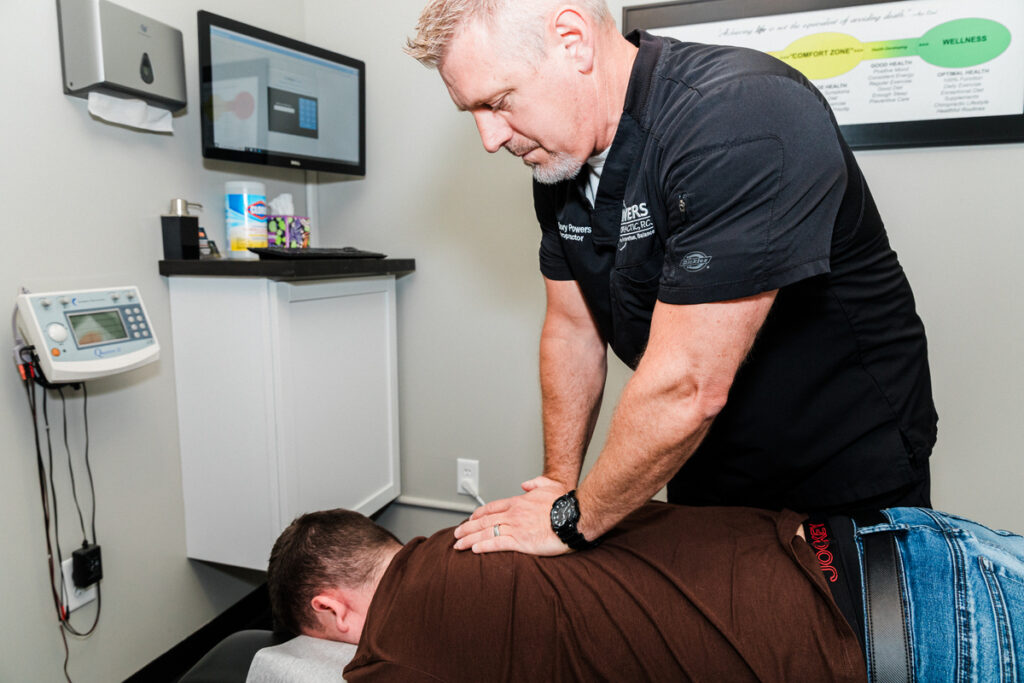
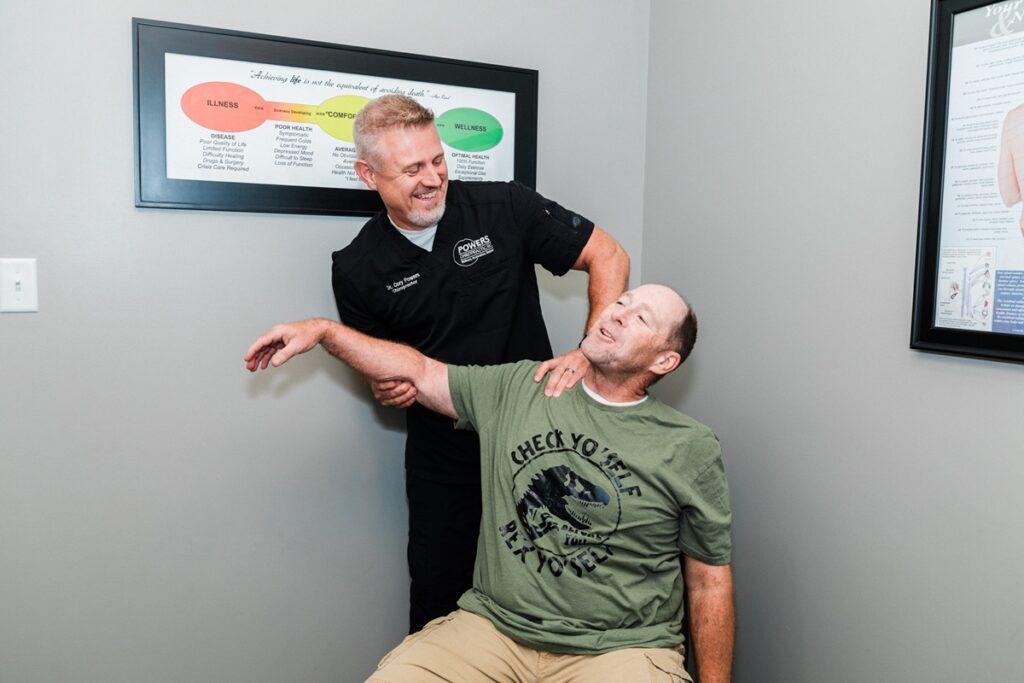
The cornerstone of chiropractic care is the spinal adjustment (also called spinal manipulation). During an adjustment, Dr. Powers applies a gentle, precise force to specific joints of the spine that are restricted or not moving properly. This helps restore normal motion, reduce nerve irritation, and relieve muscle tension. Evidence from organizations like the American College of Physicians (ACP) and the National Institutes of Health (NIH/NCCIH) indicates that spinal manipulation can be an effective option for managing both acute and chronic low back pain — and it does so without medication or surgery.
But chiropractic care at Powers Chiropractic isn’t a one-size-fits-all approach. Alongside adjustments, care may include soft tissue techniques to address muscle tension, guidance on posture and movement habits, and recommendations for stretches or exercises that support healing between visits. The idea is to treat the whole person — not just the part that hurts.
Many patients here in the Omaha area come in having already tried over-the-counter pain medications, online stretching routines, or even physical therapy with limited results. Chiropractic often provides a missing piece — directly addressing the mechanical and structural factors that other approaches may not fully reach.
Practical Tips for Managing Back Pain at Home
While professional care is important, there are also things you can do at home to support your spine and reduce discomfort between visits. These recommendations are safe, simple, and in line with what Dr. Cory Powers encourages his Omaha patients to practice daily.
Move regularly. Staying still for long periods — whether that’s sitting at a desk or lying on the couch — allows muscles to stiffen and joints to become less mobile. Aim to get up and move for a few minutes every hour. Even a short walk around the block can make a real difference over time.
Be mindful of your workstation setup. If you work at a desk, make sure your monitor is at eye level, your feet rest flat on the floor, and your lower back has adequate support. Small ergonomic adjustments can dramatically reduce the cumulative strain on your spine throughout the workday.
Sleep in a spine-friendly position. Sleeping on your side with a pillow between your knees helps keep your hips and spine aligned. If you prefer your back, placing a pillow under your knees can reduce lumbar strain. Try to avoid sleeping on your stomach — it places significant stress on the neck and lower back.
Lift with your legs, not your back. When picking something up — whether it’s a box, a grocery bag, or a grandchild — bend at the hips and knees rather than rounding your lower back. It’s a simple habit that protects your discs and muscles from unnecessary strain.
When to See a Chiropractor
It can be tempting to wait out back pain and hope it goes away on its own. Sometimes it does. But when pain persists beyond a few days, begins to interfere with your sleep or daily activities, or keeps coming back in cycles, it’s time to get a professional evaluation.
Chiropractic care is especially worth considering if your back pain is associated with stiffness in the morning, worsens with prolonged sitting or standing, or seems to be triggered by a specific movement or activity. These are often signs of joint dysfunction or muscle imbalance that responds very well to chiropractic treatment.
There are, however, certain symptoms that warrant prompt medical attention rather than — or in addition to — chiropractic care. If you experience back pain alongside loss of bladder or bowel control, severe numbness or weakness in your legs, unexplained weight loss, or pain following a significant trauma, please seek medical evaluation right away. Dr. Cory Powers and the team at Powers Chiropractic take your safety seriously, and part of good care is knowing when to refer.
Back Pain: Common Causes vs. What You Might Feel
|
Cause of Back Pain |
Common Symptoms |
Who It Tends to Affect |
|---|---|---|
|
Spinal Joint Dysfunction |
Localized stiffness, aching, reduced range of motion |
Adults of all ages, especially those with sedentary habits |
|
Muscle Strain / Ligament Sprain |
Sharp or dull pain after sudden movement, tenderness to touch |
Active adults, those who lift regularly, weekend warriors |
|
Herniated or Bulging Disc |
Radiating leg pain (sciatica), numbness, tingling |
Adults 30–60, those with desk jobs or heavy labor |
|
Poor Posture / Prolonged Sitting |
Gradual, diffuse aching that worsens through the day |
Office workers, students, anyone on screens for long periods |
|
Degenerative Disc Changes |
Deep, persistent ache, stiffness especially in the morning |
Older adults, those with previous back injuries |
Myths vs. Facts About Back Pain
Myth: Rest is the best treatment for back pain.
Fact: While rest may help in the very short term after an acute injury, prolonged bed rest is generally not recommended and can actually slow recovery. Evidence consistently supports gentle movement and staying as active as tolerable as a more effective approach for most types of back pain.
Myth: Back pain always means something is seriously wrong.
Fact: The vast majority of back pain episodes are musculoskeletal in nature and not caused by serious underlying disease. Many people with significant back pain on imaging have no symptoms — and vice versa. A proper evaluation helps put things in perspective and identifies what’s actually going on.
Myth: Chiropractic adjustments are dangerous.
Fact: Spinal manipulation performed by a licensed chiropractor is considered a safe, well-tolerated treatment for most people with back pain. Serious adverse events are rare. Dr. Cory Powers conducts a thorough assessment before recommending any treatment to ensure it’s appropriate for each individual patient.
Myth: You’ll need chiropractic care forever once you start.
Fact: Some patients choose ongoing wellness care to maintain spinal health — but that’s always a personal choice, never a requirement. Many patients at Powers Chiropractic achieve significant relief within a focused course of care and return only as needed or for periodic check-ins.
Myth: Surgery is the only option for disc problems.
Fact: Many disc-related issues, including herniated discs, respond well to conservative care like chiropractic treatment, especially when addressed before the condition becomes severe. Surgery is typically considered only when conservative options have been tried and haven’t provided adequate relief.
Final Thoughts from Powers Chiropractic
Back pain is incredibly common, but that doesn’t mean you have to simply live with it. Here in Omaha, the team at Powers Chiropractic is dedicated to helping families and individuals get to the root of what’s causing their pain — and building a path toward genuine, lasting relief. Dr. Cory Powers approaches every patient with warmth, curiosity, and a genuine commitment to understanding your unique situation.
You deserve to move freely, sleep well, and show up fully for the people and moments that matter most in your life. Whether you’re dealing with a nagging lower back ache that’s been hanging around for months or a sudden flare-up that stopped you in your tracks, you don’t have to figure it out alone. The team at Powers Chiropractic in Omaha, Nebraska is here to help you find your way back to feeling like yourself again — naturally, gently, and without the need for surgery or long-term medication dependence.
If you’re ready to stop guessing and start healing, we’d love to welcome you into our care. Book your appointment today and take the first step toward a healthier, more active life.
Frequently Asked Questions
How long does it take to feel better with chiropractic care for back pain?
Everyone’s timeline is a little different depending on the cause and duration of their back pain. Some patients notice improvement after just a few visits, while others with longer-standing issues may need a more extended course of care. Dr. Cory Powers will give you a realistic picture of what to expect during your initial evaluation.
Is chiropractic care safe for older adults with back pain?
Yes — chiropractic care can be an excellent option for older adults, and techniques can be easily modified to be gentler and more comfortable for aging spines. Powers Chiropractic serves many seniors in the Omaha community and tailors care to each individual’s needs and health history.
Can chiropractic help with sciatica?
Sciatica — that sharp, radiating pain that travels from the lower back down the leg — is often caused by nerve irritation related to a disc or spinal joint issue. Chiropractic care has been shown to help many patients with sciatic symptoms by addressing the underlying mechanical cause of the nerve pressure.
Do I need a referral to see a chiropractor in Nebraska?
In most cases, no referral is needed to schedule an appointment with a chiropractor in Nebraska. You can contact Powers Chiropractic directly to book your first visit and begin your evaluation right away.
What happens during a first chiropractic visit for back pain?
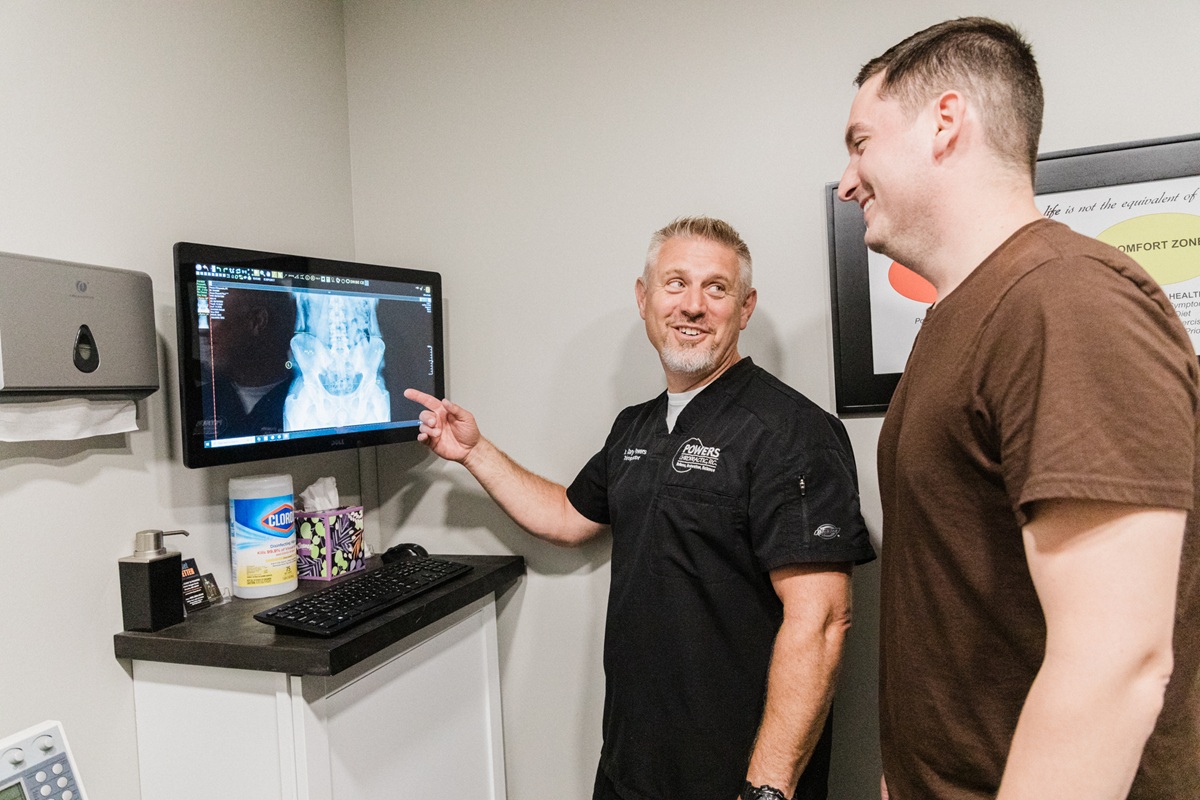
Your first visit will typically include a detailed health history, a physical and postural examination, and a discussion of your symptoms and goals. Dr. Cory Powers will review the findings with you and explain what’s happening before making any treatment recommendations. Nothing happens without your understanding and consent.
Can chiropractic care prevent back pain from coming back?
While no treatment can guarantee prevention, maintaining spinal health through regular chiropractic care — combined with good posture habits, regular movement, and core strength — can significantly reduce the frequency and severity of recurring back pain episodes for many patients.
TL;DR — Key Takeaways
-
Back pain most commonly stems from spinal joint dysfunction, muscle strain, disc issues, or poor posture — and addressing the root cause is key to lasting relief.
-
Everyday habits like prolonged sitting, poor ergonomics, and chronic stress can trigger or worsen back pain over time.
-
Chiropractic care offers a safe, natural, non-invasive approach to back pain relief by restoring proper spinal movement and function.
-
Simple habits — like moving regularly, optimizing your workspace, and lifting correctly — can make a real difference in how your back feels day to day.
-
If your back pain is persistent, recurring, or affecting your quality of life, the team at Powers Chiropractic in Omaha, Nebraska is here to help you find real answers and lasting relief.