
Back pain is one of the most common reasons people seek medical care, and yet one of its most significant contributing factors often goes unaddressed: posture. If you’ve ever caught yourself slouching at your desk, hunching over your phone, or standing with your weight shifted to one hip, you already know that maintaining good posture isn’t always easy. Here in Omaha, NE, many patients come through the doors at Powers Chiropractic having dealt with chronic back pain for months — sometimes years — without ever connecting it to the way they hold their body throughout the day. The good news is that posture is something you can improve, and chiropractic care can play a meaningful role in helping you do just that.
What is the connection between posture and back pain? Posture refers to the position in which you hold your body while standing, sitting, or moving. When posture is poor over time, it places uneven stress on the spine, muscles, and surrounding tissues — leading to pain, stiffness, and dysfunction that can become chronic if left unaddressed.
What Is Posture and Why Does It Matter?
Posture is more than just how you look when you stand up straight. It describes the alignment and positioning of your entire musculoskeletal system — your bones, joints, muscles, and connective tissues — as they work together to support your body against gravity. There are two types of posture worth understanding: static posture, which is how you hold yourself while still (like sitting at a desk), and dynamic posture, which is how you carry yourself while moving (like walking or bending).
A healthy spine has three natural curves: a gentle forward curve in the neck (cervical lordosis), a backward curve in the mid-back (thoracic kyphosis), and a forward curve in the lower back (lumbar lordosis). These curves work together like a spring, absorbing shock and distributing load evenly throughout the spine. When posture is poor, these curves are altered, and the entire system begins to compensate in ways that often lead to pain and injury.
At Powers Chiropractic, Dr. Cory Powers often explains to patients that posture isn’t just about aesthetics — it’s about how efficiently your body functions. When your posture is well-balanced, your muscles don’t have to work as hard, your nerves have more space, and your joints experience less wear and tear. Over time, good posture is one of the most powerful tools you have for protecting your long-term spinal health.

How Poor Posture Causes Back Pain
The relationship between poor posture and back pain is well-established in musculoskeletal research. When you sit or stand in an unbalanced position for extended periods, certain muscles become overworked while others weaken from underuse. This muscle imbalance creates tension, reduces mobility, and puts increased pressure on the spinal discs and joints.
Forward head posture is a perfect example. For every inch your head shifts forward from its neutral position, the effective weight your cervical spine must support increases dramatically. This doesn’t just affect the neck — it creates a ripple effect down into the upper and mid-back, forcing the thoracic spine to round forward (often called “tech neck” or hyperkyphosis) and placing strain on the lumbar spine as it tries to compensate.
Prolonged sitting is another major culprit. When we sit — especially in positions that allow us to slouch — the lumbar spine loses its natural curve and the discs in the lower back are placed under significantly more pressure than when we stand or move. Research published in respected musculoskeletal journals has consistently linked sedentary, seated lifestyles with higher rates of low back pain. Here in Omaha, where many residents spend long hours working at computers or commuting, this is a pattern Dr. Cory Powers sees regularly.
Poor posture also affects the nervous system. The spinal cord and the nerve roots that branch off of it pass through and around the vertebrae. When spinal alignment is compromised, nerves can become irritated or compressed — contributing not only to local back pain but also to radiating symptoms like numbness, tingling, or weakness in the arms or legs.
Signs Your Posture May Be Affecting Your Spine
Postural problems don’t always announce themselves with sudden, dramatic pain. More often, they develop quietly over months or years, showing up in subtle ways that are easy to dismiss. Understanding the warning signs can help you take action before the problem becomes more serious.
One of the most common early signs is muscle fatigue or tension — particularly in the upper back, neck, or lower back — that seems to worsen as the day goes on. If you notice that you feel noticeably more uncomfortable after a full workday than you did in the morning, posture may be a contributing factor. Headaches that originate at the base of the skull are another common signal, often tied to tension in the neck and upper back from forward head posture.
Other signs worth paying attention to include uneven shoulder height, one hip sitting higher than the other, a tendency to lean to one side when standing, or difficulty standing fully upright without effort. Some patients at Powers Chiropractic in Omaha notice that their clothes hang unevenly, or that they feel stiff and achy after sitting for short periods of time. These are all valuable clues that your spinal alignment and posture deserve a closer look.
How Chiropractic Care Fits Into Posture Correction and Back Pain Relief
Chiropractic care is a natural, non-invasive, drug-free approach to addressing the structural and functional issues that poor posture creates. Rather than simply managing symptoms, chiropractic care aims to identify and address the underlying causes of back pain — including spinal misalignments, joint restrictions, and muscle imbalances that are often directly related to postural habits.
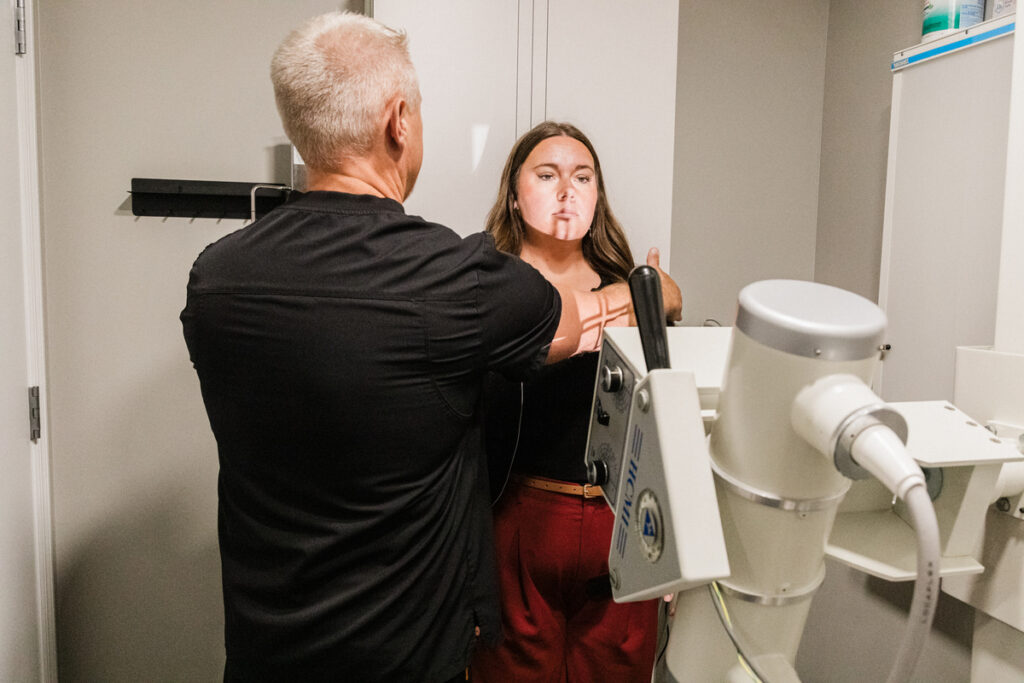
At Powers Chiropractic, Dr. Cory Powers begins with a thorough evaluation that includes a detailed postural assessment. This helps identify how your body is currently aligned, where compensations are occurring, and which areas of the spine may be under the most stress. From there, a care plan is developed that is individualized to your specific needs and goals.
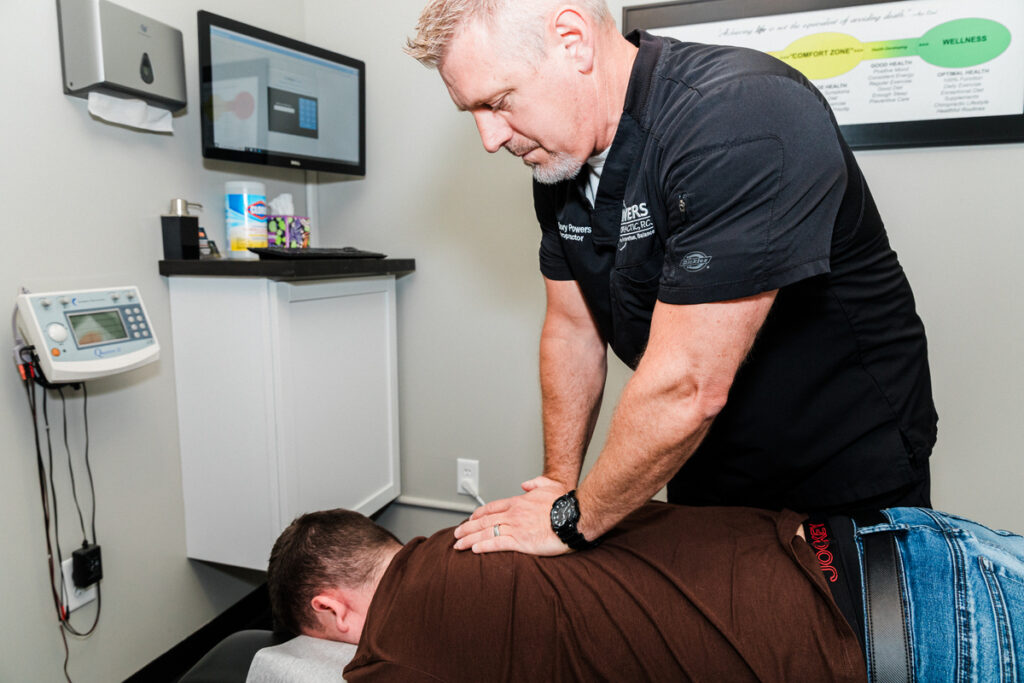
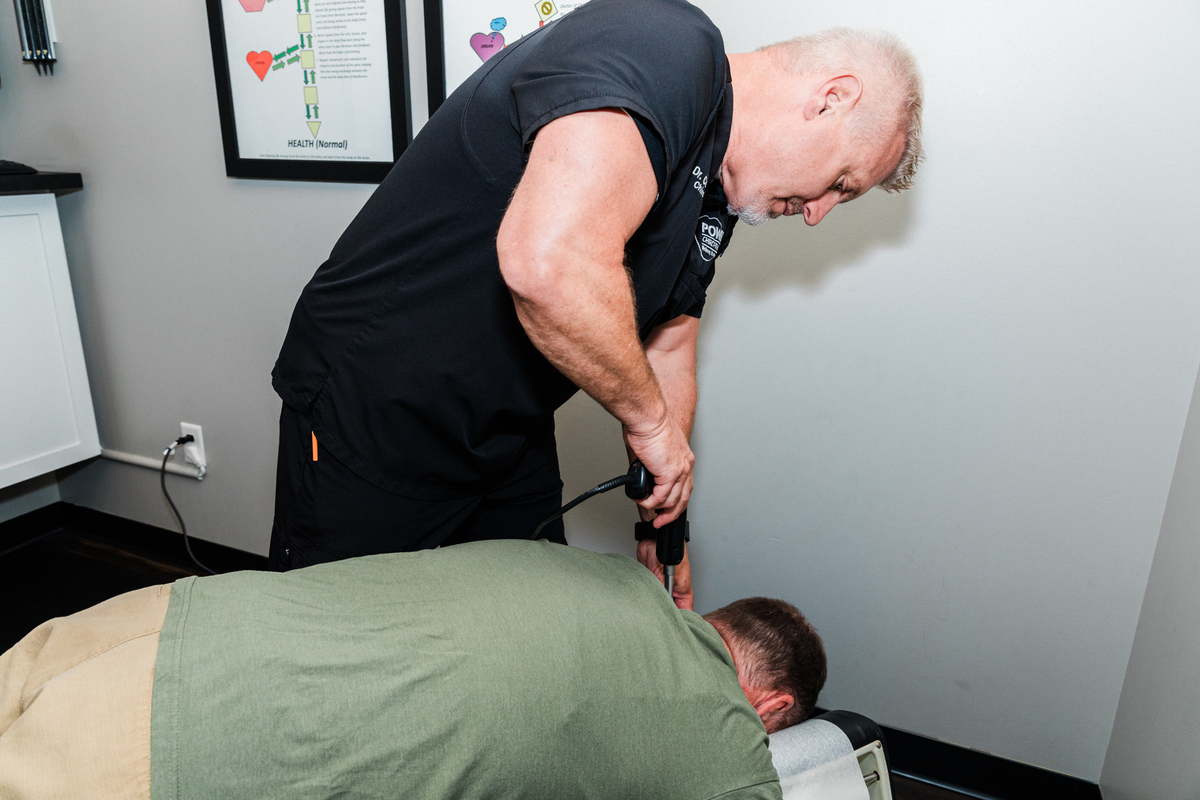
Chiropractic adjustments — the gentle, precise movements applied to the joints of the spine — work to restore proper alignment and improve joint mobility. When spinal joints move the way they’re designed to, the surrounding muscles are better able to support the spine in a balanced way. Over time, this can reduce pain, improve posture awareness, and help retrain the body to hold itself more efficiently.
In addition to spinal adjustments, Dr. Cory Powers may incorporate postural correction exercises, soft tissue work, and ergonomic guidance into care. Evidence from organizations like the American Chiropractic Association (ACA) and bodies such as the National Center for Complementary and Integrative Health (NCCIH) suggests that chiropractic care, particularly when combined with exercise and lifestyle modification, can be an effective component of conservative back pain management. The goal at Powers Chiropractic is always to give patients the tools they need to feel better — and stay better — long after they leave the office.
Practical Tips for Better Posture Every Day
Improving your posture is a gradual process, but small, consistent changes can make a significant difference over time. Dr. Cory Powers encourages patients to start with their workstation, since this is where many Omaha residents spend the majority of their waking hours. Your monitor should be at eye level so your neck isn’t tilting up or down. Your chair should support the natural curve of your lower back, and your feet should be flat on the floor with your hips at approximately a 90-degree angle.
Frequent movement is equally important. No matter how good your ergonomic setup is, staying in any one position for too long places cumulative stress on the spine. Aim to stand, stretch, or take a short walk every 30 to 60 minutes. Even a brief reset — rolling your shoulders back, gently tucking your chin, and taking a deep breath — can remind your body to return to a more balanced position.
Building core strength over time supports your posture from the inside out. The muscles of the abdomen, back, and hips function as a dynamic support system for the spine. When they’re weak or imbalanced, the spine has to work harder to stay upright. Gentle exercises like bridges, bird-dogs, and modified planks can help strengthen this foundation without placing excessive strain on the back. Always check with your chiropractor or healthcare provider before beginning a new exercise program, especially if you’re currently experiencing pain.
Finally, be mindful of how you use your phone and other devices. “Tech neck” — the posture that results from looking down at a screen for extended periods — is increasingly common and can place significant strain on the cervical spine. Holding your phone or tablet at eye level, even briefly, can help reduce this cumulative load.
When to See a Chiropractor for Back Pain and Posture
You don’t have to be in severe pain to benefit from a chiropractic evaluation. In fact, many of the patients who see the greatest long-term improvements are those who seek care early — before postural imbalances become deeply ingrained or result in more significant spinal problems. If you’ve been experiencing back pain that persists for more than a week or two, or if you’ve noticed any of the postural warning signs described earlier, scheduling an evaluation is a reasonable and proactive step.
That said, there are certain symptoms that warrant prompt medical attention rather than a wait-and-see approach. If you experience back pain accompanied by loss of bladder or bowel control, significant weakness in the legs, fever, or unexplained weight loss, please seek emergency or urgent medical care. These symptoms may indicate a more serious underlying condition that requires immediate evaluation beyond the scope of chiropractic care.
For the vast majority of back pain cases, however, conservative care is where most guidelines — including those from the American College of Physicians (ACP) — recommend starting. Chiropractic care fits squarely within that conservative, first-line approach.
Posture Habits: What to Avoid vs. What to Do
|
Poor Posture Habit |
Healthier Alternative |
Why It Matters |
|---|---|---|
|
Slouching in a desk chair |
Sit with lumbar support and feet flat on floor |
Reduces disc pressure and muscle fatigue in the lower back |
|
Looking down at your phone |
Hold the device at eye level |
Decreases strain on the cervical spine and upper back muscles |
|
Standing with weight on one hip |
Distribute weight evenly on both feet |
Prevents uneven loading of the pelvis and lumbar spine |
|
Sitting for hours without moving |
Break every 30–60 minutes with standing or walking |
Relieves cumulative spinal compression and improves circulation |
|
Sleeping on your stomach |
Sleep on your side or back with proper pillow support |
Reduces rotational stress on the neck and lower back |
Myths vs. Facts About Posture and Back Pain
Myth: Back pain is just a normal part of aging and there’s not much you can do about it.
Fact: While musculoskeletal changes do occur with age, back pain is not an inevitable or irreversible part of growing older. Research consistently shows that lifestyle factors — including posture, activity level, and spinal health — play a significant role in whether or not pain develops or persists. Many patients at Powers Chiropractic in Omaha have experienced meaningful improvement in back pain at all stages of life.
Myth: You should rest completely when your back hurts.
Fact: Prolonged bed rest is no longer recommended for most types of back pain. Evidence from major health bodies, including guidelines supported by the World Health Organization (WHO), suggests that staying gently active and moving is generally more beneficial for recovery than complete rest. Your chiropractor can help guide you on what types of movement are safe and appropriate during your recovery.
Myth: Perfect posture means sitting up rigidly straight at all times.
Fact: Good posture doesn’t mean being stiff or perfectly upright every moment. It means maintaining a balanced, supported position that preserves the spine’s natural curves without excessive strain. In fact, being overly rigid can create its own set of muscular tension. The goal is relaxed, supported alignment — not military stiffness.
Myth: Chiropractic adjustments are only for people who already have severe pain.
Fact: Chiropractic care is appropriate across a wide spectrum — from people with acute injuries to those with mild discomfort or simply wanting to maintain their spinal health and posture. Many patients visit Dr. Cory Powers for proactive, wellness-based care even when they’re not in significant pain.
Myth: Once you fix your posture, back pain will immediately go away.
Fact: Posture correction is a process, not an instant fix. The muscles, joints, and habits that contribute to poor posture develop over years, and retraining them takes time and consistency. Chiropractic care supports this process, but realistic expectations are important — gradual, sustainable improvement is the goal.
Final Thoughts from Powers Chiropractic in Omaha
Posture and back pain are deeply connected, and understanding that connection is one of the most empowering things you can do for your long-term health. The spine is incredibly resilient, but it thrives when it’s given the support, movement, and alignment it needs to function at its best. Small daily habits — how you sit, how you stand, how you move — add up in a significant way over months and years.
Here at Powers Chiropractic in Omaha, NE, Dr. Cory Powers is committed to helping the local community understand not just how to treat back pain, but how to prevent it from taking over your life in the first place. Whether you’re dealing with nagging discomfort that’s been building for a while, or you simply want to be proactive about your spinal health, this is a place where you’ll be heard, evaluated thoroughly, and cared for with an approach that’s grounded in science and compassion.
You don’t have to keep living with back pain or wondering why your posture keeps slipping. A conversation with Dr. Cory Powers can help you get a clearer picture of what’s happening in your body and what steps you can take to move forward. The team at Powers Chiropractic looks forward to being part of your wellness journey right here in Omaha.
Frequently Asked Questions
Can chiropractic care actually improve my posture, or does it just relieve pain?
Chiropractic care can address both. By restoring proper spinal alignment and joint mobility, chiropractic adjustments help the body hold itself in a more balanced position. When combined with postural exercises and ergonomic guidance — all of which Dr. Cory Powers incorporates at Powers Chiropractic — patients often see improvements in both pain levels and overall posture over time.
How long does it take to correct poor posture?
There’s no single timeline that applies to everyone, as it depends on how long postural habits have been in place, the individual’s overall health, and their consistency with care and home exercises. Generally speaking, noticeable improvements may begin within a few weeks, but lasting correction typically unfolds over several months of consistent effort.
Is back pain from poor posture something a chiropractor can help with, or do I need to see a medical doctor first?
For most cases of posture-related back pain without serious red flag symptoms, seeing a chiropractor first is a reasonable and evidence-supported choice. Major clinical guidelines, including those from the American College of Physicians, recommend conservative care — such as chiropractic — as a first-line option for non-specific low back pain. Of course, if you have any concerning symptoms, a medical evaluation should not be delayed.
Does sleeping position affect posture and back pain?
Yes, sleep position can have a real impact on spinal alignment. Sleeping on your stomach, for example, places the neck in a rotated position for hours at a time and can contribute to cervical and lumbar discomfort. Sleeping on your side with a pillow between the knees, or on your back with a pillow under the knees, is generally more supportive for spinal alignment.
How often should I see a chiropractor for posture-related back pain?
The frequency of chiropractic visits depends on the severity of your condition, your goals, and how your body responds to care. Dr. Cory Powers will work with you to develop a care plan that makes sense for your individual situation — this might begin with more frequent visits and taper as your condition improves. Ongoing wellness visits can also be a helpful part of long-term posture maintenance.
Are chiropractic adjustments safe for people with chronic back pain?
Chiropractic adjustments are widely regarded as safe for most people with chronic back pain when performed by a licensed, trained chiropractor. As with any healthcare intervention, a thorough evaluation is important to ensure the approach is appropriate for your specific condition. Dr. Cory Powers conducts a complete assessment before beginning any care to make sure treatments are well-matched to each patient’s needs.
TL;DR — Key Takeaways
-
Poor posture places uneven stress on the spine, leading to muscle imbalances, joint strain, and back pain that can become chronic over time.
-
Common postural problems — like forward head posture, prolonged sitting, and uneven weight distribution — are significant contributors to back pain that many people overlook.
-
Chiropractic care, as offered by Dr. Cory Powers at Powers Chiropractic in Omaha, NE, addresses the structural and functional causes of posture-related back pain through spinal adjustments, exercise guidance, and ergonomic education.
-
Simple daily habits — like adjusting your workstation, taking movement breaks, and being mindful of device use — can meaningfully reduce postural strain on the spine.
-
Back pain is not inevitable, and posture can be improved at any age with the right support, consistency, and care.