
If you’ve been dealing with that stabbing heel pain of plantar fasciitis, you’ve probably heard the same advice over and over: “Just stretch your feet more.” It’s one of the most common recommendations floating around the internet, shared in Facebook groups, and even mentioned by well-meaning friends. But here in Omaha, we see countless patients at Powers Chiropractic who’ve been stretching their feet religiously for months, only to find their plantar fasciitis getting progressively worse instead of better. The truth? Stretching your feet might actually be aggravating your condition rather than helping it heal. Understanding why this happens—and what actually works—can make all the difference in your recovery.
Why does stretching make plantar fasciitis worse? Excessive or aggressive foot stretching can overstrain already-inflamed plantar fascia tissue, preventing it from healing properly. The plantar fascia needs controlled loading and stability rather than constant pulling, which can perpetuate the inflammatory cycle and increase microtearing in the tissue.
Table of Contents
- What Plantar Fasciitis Really Is (And Isn’t)
- The Stretching Paradox: Why More Isn’t Better
- Understanding the Biomechanics Behind the Pain
- Common Stretching Mistakes That Worsen Symptoms
- How Chiropractic Care Addresses the Root Cause
- What Actually Helps Plantar Fasciitis Heal
- When to See a Chiropractor for Heel Pain
- Myths vs. Facts About Plantar Fasciitis
- Final Thoughts
What Plantar Fasciitis Really Is (And Isn’t)
Plantar fasciitis involves inflammation and degeneration of the plantar fascia—a thick band of connective tissue that runs along the bottom of your foot from your heel bone to your toes. This tissue acts like a shock-absorbing bowstring, supporting your arch and distributing forces when you walk, run, or stand. When this tissue becomes overloaded, irritated, or damaged, it creates that characteristic sharp, stabbing pain in the heel, especially with those first steps in the morning.
What many people don’t realize is that plantar fasciitis isn’t just about the foot itself. The condition often develops as a result of biomechanical dysfunction higher up in the kinetic chain—your ankles, knees, hips, pelvis, and even your spine. Here at Powers Chiropractic in Omaha, we frequently see patients whose foot pain stems from misalignments or compensatory patterns elsewhere in their body. When your body mechanics are off, your feet bear the brunt of that dysfunction.
The condition is also frequently misunderstood. Many people assume plantar fasciitis is purely an inflammatory condition that will resolve with rest and anti-inflammatory measures. However, research indicates that chronic plantar fasciitis often involves degenerative changes in the tissue rather than active inflammation. This means the tissue has undergone structural breakdown and weakening, which requires a different treatment approach than simple inflammation management.
The plantar fascia needs a delicate balance. It requires enough tension to function properly but not so much stress that it continues to break down. This is where the conventional stretching advice goes wrong—it assumes the tissue is simply “tight” when the real problem is often weakness, degeneration, or biomechanical overload from another source.
The Stretching Paradox: Why More Isn’t Better
The standard advice for plantar fasciitis typically includes vigorous foot stretching exercises—pulling your toes back, stretching your calf muscles, and using devices like night splints to keep your foot dorsiflexed while you sleep. On the surface, this seems logical. If something hurts and feels tight, stretching should help, right? Unfortunately, with plantar fasciitis, this intuitive approach often backfires.
When you aggressively stretch inflamed or degenerative tissue, you’re essentially pulling on damaged fibers that need time and proper conditions to heal. Imagine repeatedly pulling on a frayed rope—you’re not making it stronger; you’re causing additional microtrauma. The plantar fascia, when already compromised, responds to excessive stretching by becoming more irritated and potentially developing additional microtears.
Evidence suggests that while some gentle mobility work can be beneficial, aggressive or frequent stretching can perpetuate the pain cycle. The tissue becomes caught in a loop: it’s irritated, you stretch it, it becomes more irritated, and the healing process stalls. Many of our patients at Powers Chiropractic come in frustrated after months of diligent stretching with no improvement—or even with worsening symptoms.
The timing of stretching also matters significantly. Many people perform aggressive foot stretches first thing in the morning when the plantar fascia is at its most vulnerable state. After hours of immobility during sleep, the tissue is stiff and less pliable. Forcing it into an aggressive stretch at this time can cause additional damage rather than promoting healing.
This doesn’t mean all movement is bad—quite the opposite. The key is understanding the difference between therapeutic loading that promotes healing and excessive strain that perpetuates tissue breakdown. Your plantar fascia needs controlled, progressive stress to rebuild strength, not constant pulling that prevents recovery.
Understanding the Biomechanics Behind the Pain
To understand why stretching often fails, you need to understand what’s really happening in your foot and lower extremity. The plantar fascia doesn’t exist in isolation—it’s part of an interconnected system that includes your Achilles tendon, calf muscles, hamstrings, and the entire posterior chain of your body. When one area becomes dysfunctional, compensatory patterns develop throughout this system.
Your plantar fascia works in partnership with something called the windlass mechanism. When you walk, your toes naturally dorsiflex (bend upward) during the push-off phase of gait. This action tightens the plantar fascia like a winch, creating tension that supports your arch and stores elastic energy. This is a normal, healthy function. Problems arise when this mechanism becomes overloaded due to poor foot mechanics, excessive pronation, or compensation for dysfunction elsewhere.
Here in Omaha, we see many patients whose plantar fasciitis actually stems from issues in their pelvis, sacroiliac joints, or lumbar spine. When your pelvis is misaligned or your gait pattern is altered due to spinal dysfunction, your feet must compensate with every single step you take. Over thousands of steps per day, this compensation creates excessive strain on the plantar fascia.
The foot’s arch system is also critical to understanding this condition. Your foot has three arches—medial longitudinal, lateral longitudinal, and transverse. These arches work together to distribute weight and absorb shock. When one arch collapses or becomes rigid, the others must compensate, and the plantar fascia experiences abnormal loading patterns. This is a structural and functional problem that stretching alone cannot address.
Another biomechanical factor involves the relationship between your ankle mobility and foot function. Limited ankle dorsiflexion—the ability to bring your shin forward over your foot—forces your foot to pronate excessively to compensate. This excessive pronation stretches the plantar fascia beyond its optimal range with every step. Rather than stretching the foot itself, addressing ankle mobility limitations through joint mobilization and proper strengthening proves far more effective.
Common Stretching Mistakes That Worsen Symptoms
Not all stretching approaches are created equal, and several common mistakes can actively worsen plantar fasciitis symptoms. The first major error is performing aggressive, ballistic stretching of the foot and calf muscles. Bouncing movements or forcing your foot into extreme positions creates rapid tension changes that can damage compromised tissue rather than helping it heal.
Another widespread mistake is over-stretching the calf muscles without addressing foot and ankle strength. Many people spend extensive time stretching their calves, assuming tightness is the primary problem. However, what feels like tightness may actually be weakness or neuromuscular guarding—your body’s protective response to instability. Stretching away this protective tension without building strength and stability leaves your foot more vulnerable to injury.
Using night splints inappropriately is another common issue we address at Powers Chiropractic. While night splints can be helpful for some individuals, many people use them incorrectly or for too long. Keeping your foot in a dorsiflexed position all night maintains constant tension on already-irritated tissue, potentially preventing the rest and recovery that’s essential for healing. Night splints should be used strategically and temporarily, not as a long-term solution.
Foam rolling the bottom of the foot is another technique that often does more harm than good when performed aggressively. While gentle soft tissue work can reduce tension in surrounding muscles, aggressively rolling directly on the inflamed plantar fascia creates additional trauma. The pressure applied during aggressive foam rolling can be equivalent to body weight concentrated on a small area of already-damaged tissue.
Perhaps the biggest mistake is stretching in isolation without addressing the underlying biomechanical dysfunction. If your plantar fasciitis stems from pelvic misalignment, poor hip stability, or altered gait mechanics, no amount of foot stretching will resolve the root cause. The foot will continue to be overloaded until the upstream dysfunction is corrected.
| Harmful Stretching Practice | Why It Worsens Symptoms | Better Alternative |
|---|---|---|
| Aggressive toe pulls first thing in morning | Stretches vulnerable, stiff tissue before warm-up | Gentle ankle circles, gradual weight-bearing before aggressive motion |
| Prolonged night splint use | Maintains constant tension, prevents tissue rest | Strategic, short-term use during acute phases only |
| Hard foam rolling on plantar fascia | Creates additional microtrauma to inflamed tissue | Gentle massage of surrounding calf muscles, targeted soft tissue work |
| Excessive calf stretching without strengthening | Reduces protective tension without building stability | Balanced approach combining mobility and progressive strengthening |
| Stretching without biomechanical assessment | Doesn’t address root cause of overload | Comprehensive evaluation of spine, pelvis, and lower extremity mechanics |
How Chiropractic Care Addresses the Root Cause
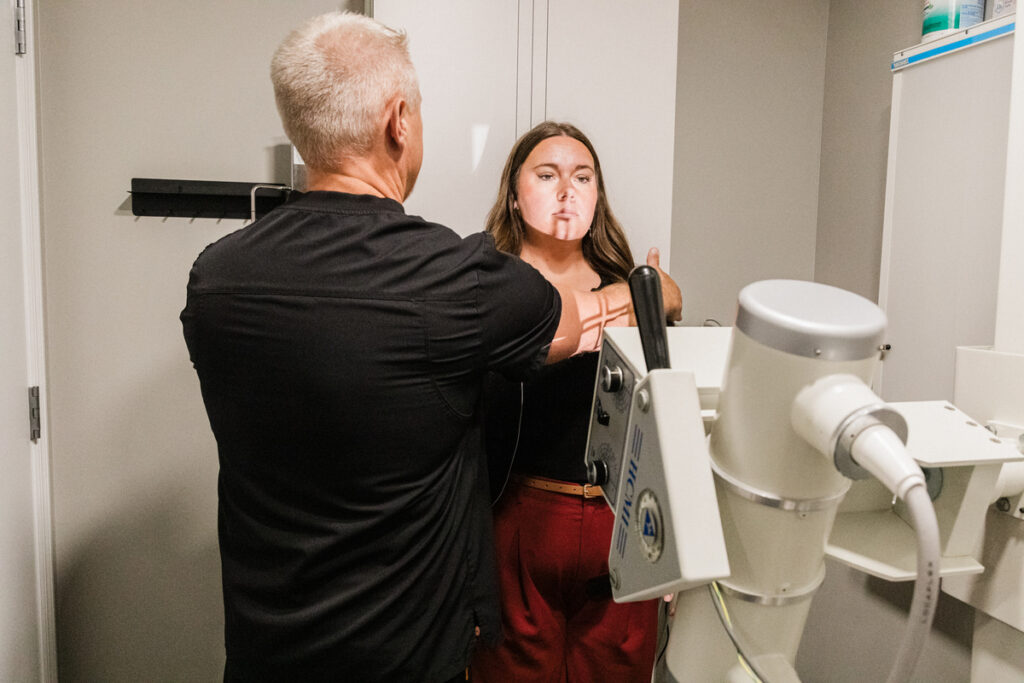
At Powers Chiropractic in Omaha, NE, we take a comprehensive approach to plantar fasciitis that goes well beyond simply treating the foot. Our focus is on identifying and correcting the biomechanical dysfunctions that created the excessive load on your plantar fascia in the first place. This means examining your entire kinetic chain—from your feet all the way up through your spine.
Chiropractic adjustments can be particularly valuable for addressing pelvic and spinal misalignments that alter your gait pattern. When your sacroiliac joints are restricted or your lumbar spine has lost its normal motion, your body compensates with altered movement patterns that affect how forces travel through your legs and feet. By restoring proper joint function and alignment, we can often reduce the abnormal stress being placed on your plantar fascia with every step.
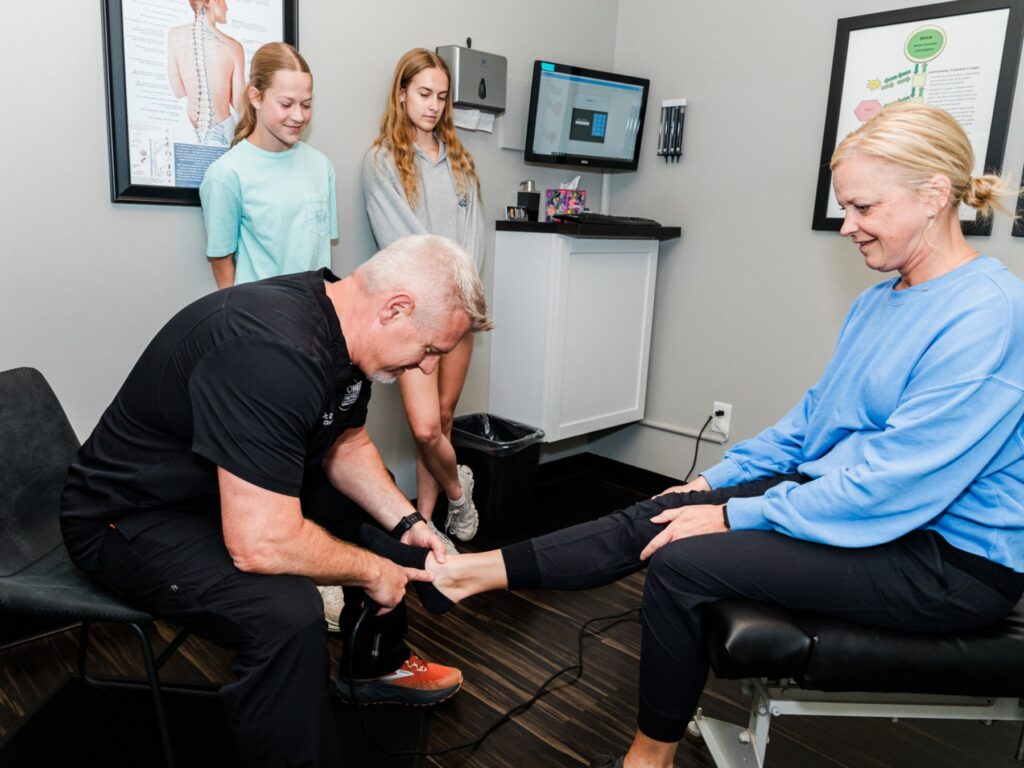
We also utilize specific extremity adjusting techniques for the foot and ankle joints themselves. The foot contains 26 bones and numerous joints that can become restricted or misaligned. When these joints don’t move properly, the plantar fascia must work harder to stabilize the foot, leading to overload and breakdown. Gentle mobilization and adjustment of these joints can restore proper mechanics and reduce strain on the plantar fascia.
Soft tissue techniques play an important role as well, but we apply them strategically rather than aggressively. Targeted work on the calf muscles, Achilles tendon, and muscles of the lower leg can reduce tension in structures that connect to or influence the plantar fascia. The key difference is that we’re working on supportive tissues rather than repeatedly stressing the damaged fascia itself.
Perhaps most importantly, we provide education on proper movement patterns, footwear considerations, and progressive strengthening exercises. Evidence indicates that strengthening programs, particularly high-load strength training for the calf and foot muscles, can be more effective than stretching for resolving plantar fasciitis. We guide you through exercises that rebuild the load-bearing capacity of your foot without aggravating the condition.
Our approach is individualized because every case of plantar fasciitis is unique. Some patients need primarily spinal and pelvic work, others benefit most from extremity adjusting and gait retraining, and many require a combination approach. The common thread is addressing the underlying dysfunction rather than just chasing the symptom.
What Actually Helps Plantar Fasciitis Heal
If excessive stretching isn’t the answer, what actually works for resolving plantar fasciitis? The research points to several evidence-based strategies that prove more effective than the traditional stretch-focused approach. Understanding and implementing these strategies can dramatically improve your recovery timeline and outcomes.
First, controlled loading through progressive strengthening has emerged as one of the most effective interventions. Rather than stretching the plantar fascia, gradually building its capacity to handle load through specific exercises allows the tissue to adapt and strengthen. Exercises like calf raises, toe curls, and progressive weight-bearing activities help rebuild tissue resilience. The key is starting at an appropriate intensity and progressing gradually rather than doing too much too soon.
Proper footwear selection makes an enormous difference. Many of our Omaha patients have been wearing completely inappropriate shoes that contribute to their foot pain. You need footwear with adequate arch support, a slightly elevated heel, and a rigid sole that doesn’t allow excessive bending at the midfoot. Completely flat shoes or flip-flops force your plantar fascia to work overtime to stabilize your foot with every step.
Strategic rest and activity modification are essential, especially in the acute phase. This doesn’t mean complete inactivity—prolonged rest can actually weaken the tissue further. Instead, it means temporarily reducing high-impact activities like running or prolonged standing while maintaining general movement and gradually reintroducing load as the tissue heals.
Addressing biomechanical dysfunction throughout your body is crucial for long-term resolution. If your plantar fasciitis stems from pelvic misalignment, poor hip stability, or altered gait mechanics due to spinal problems, these issues must be corrected. This is where chiropractic care shines—we can identify and address these upstream dysfunctions that conventional foot-focused treatment often misses.
Morning foot preparation makes a significant difference for many people. Rather than jumping out of bed and forcing your stiff plantar fascia to suddenly bear your full weight, try some gentle preparation. Do some ankle pumps and circles while still in bed, then ease into weight-bearing gradually. Some patients find brief icing in the morning helpful for reducing pain during those initial steps.
Temporary orthotic support can be beneficial for some individuals, particularly those with significant arch collapse or abnormal foot mechanics. However, orthotics should be viewed as a tool to reduce stress while you address underlying dysfunction—not as a permanent solution. Over-reliance on orthotics without addressing weakness and biomechanical problems can lead to dependency and reduced foot function.
When to See a Chiropractor for Heel Pain
Many people with plantar fasciitis wait far too long before seeking professional care, hoping the problem will resolve on its own or responding to generic internet advice. While some mild cases do improve with rest and self-care, persistent or worsening heel pain deserves a thorough evaluation. Recognizing when professional care is needed can prevent a minor issue from becoming a chronic, debilitating problem.
You should consider seeing a chiropractor if you’ve had heel pain for more than two to three weeks that hasn’t improved with rest and basic self-care measures. Early intervention often leads to faster resolution. The longer plantar fasciitis persists, the more degenerative changes can develop in the tissue, making recovery more challenging.
If your heel pain is significantly impacting your daily activities—making it difficult to walk, stand at work, or participate in activities you enjoy—professional evaluation is warranted. At Powers Chiropractic, we understand how limiting foot pain can be, and we want to help you return to normal function as quickly as possible.
Worsening symptoms despite stretching and self-care efforts is a clear indicator that your current approach isn’t working. If you’ve been diligently following stretching protocols for weeks or months without improvement, it’s time to try a different approach. Continuing strategies that aren’t working simply delays your recovery and may worsen the underlying problem.
Pain that’s spreading beyond your heel is another reason to seek care. If you’re developing pain in your arch, ankle, calf, knee, or hip, this suggests compensatory patterns developing throughout your kinetic chain. These patterns indicate biomechanical dysfunction that requires professional assessment and correction.
Severe morning pain that doesn’t improve after your first several steps may indicate more significant tissue damage or degeneration. While some morning stiffness is typical with plantar fasciitis, pain that remains severe even after you’ve been moving around suggests the tissue isn’t recovering between periods of rest.
There are also red flags that warrant immediate medical evaluation rather than conservative care. Sharp, sudden onset of severe heel pain following a traumatic event could indicate a plantar fascia rupture. Numbness, tingling, or burning sensations in the foot suggest possible nerve involvement. Fever, redness, or swelling could indicate infection. Any of these symptoms should prompt immediate medical consultation.
Myths vs. Facts About Plantar Fasciitis
Myth: More stretching always means faster healing
Fact: Excessive or aggressive stretching can actually delay healing by creating additional microtrauma in damaged tissue. Research suggests that strengthening exercises often prove more effective than stretching protocols for resolving plantar fasciitis. The tissue needs controlled loading to rebuild strength, not constant pulling that prevents recovery.
Myth: Plantar fasciitis only affects runners and athletes
Fact: While runners certainly develop plantar fasciitis, the condition commonly affects people with sedentary lifestyles, those who stand for prolonged periods at work, and individuals with biomechanical dysfunction anywhere in their body. Here in Omaha, we treat nurses, teachers, office workers, and retirees with plantar fasciitis just as often as we treat athletes.
Myth: The problem is always in the foot itself
Fact: Many cases of plantar fasciitis stem from dysfunction in the pelvis, spine, or lower extremity that creates compensatory stress on the foot. The plantar fascia may simply be the victim of poor mechanics upstream. This is why comprehensive biomechanical assessment proves so valuable—treating only the foot often misses the root cause.
Myth: Rest alone will cure plantar fasciitis
Fact: While strategic rest and activity modification are important, complete inactivity often worsens the condition by allowing the tissue to weaken further. Evidence indicates that progressive loading through appropriate exercises helps the tissue adapt and strengthen. The key is finding the right balance between protective rest and therapeutic loading.
Myth: Surgery is inevitable if conservative care doesn’t work quickly
Fact: The vast majority of plantar fasciitis cases resolve with appropriate conservative care, though recovery can take several months. Surgery is rarely necessary and should only be considered after extended conservative treatment with a comprehensive approach—not just stretching. Many people who’ve been told they need surgery recover completely once underlying biomechanical dysfunction is properly addressed.
Final Thoughts
Dealing with the sharp, limiting pain of plantar fasciitis can be incredibly frustrating, especially when the standard advice of “just stretch more” seems to make things worse rather than better. The truth is that effective treatment requires understanding the root cause of your foot overload and addressing it comprehensively rather than simply focusing on the symptom. Your plantar fascia didn’t become irritated in isolation—it’s responding to dysfunction somewhere in your kinetic chain, altered mechanics, or tissue overload that stretching alone cannot fix.
At Powers Chiropractic in Omaha, NE, we’ve helped countless patients overcome persistent heel pain by taking this comprehensive approach. Rather than prescribing more of the same stretching routines that haven’t worked, we identify and correct the underlying biomechanical problems contributing to your condition. Whether that’s pelvic misalignment, spinal dysfunction, poor foot mechanics, or a combination of factors, addressing the root cause is what leads to lasting resolution.
If you’ve been struggling with plantar fasciitis that hasn’t responded to conventional treatment, or if you’re concerned that your stretching routine might be doing more harm than good, we encourage you to come in for an evaluation. We’ll take the time to understand your complete picture—how your symptoms started, what makes them better or worse, and how your entire body is functioning. From there, we can develop an individualized treatment plan that addresses your specific needs rather than following a one-size-fits-all protocol.
Your feet carry you through life, and you deserve to move comfortably and confidently. Don’t let persistent heel pain keep you from the activities you enjoy or the responsibilities you need to fulfill. With the right approach focused on correcting dysfunction rather than just stretching symptoms, most people with plantar fasciitis can return to full, pain-free function.
Frequently Asked Questions
How long does it typically take for plantar fasciitis to heal with proper care?
With appropriate treatment addressing underlying biomechanical dysfunction, most people see significant improvement within 6-12 weeks, though complete resolution may take 3-6 months in more chronic cases. Recovery time depends on how long you’ve had symptoms, the severity of tissue degeneration, and how consistently you address contributing factors. Early intervention generally leads to faster recovery.
Should I stop all exercise if I have plantar fasciitis?
No, complete rest often worsens the condition by allowing tissue weakening. Instead, modify activities to reduce stress on your foot while maintaining general fitness. Low-impact activities like swimming or cycling can usually continue, while high-impact activities like running may need temporary reduction. Gradually reintroduce activities as symptoms improve under professional guidance.
Can orthotics cure plantar fasciitis permanently?
Orthotics can be a helpful tool to reduce stress during the healing phase, but they don’t address underlying biomechanical dysfunction causing the overload. View orthotics as temporary support while you correct dysfunction through chiropractic care, strengthening, and improved movement patterns. Over-reliance on orthotics without addressing root causes can lead to dependency and reduced foot function.
Is plantar fasciitis different from heel spurs?
Yes, though they’re related. Heel spurs are bony growths that sometimes develop at the heel where the plantar fascia attaches, usually as a response to chronic tension. However, many people have heel spurs without pain, and many with plantar fasciitis don’t have spurs. The pain comes from fascia inflammation and degeneration, not the spur itself.
Why does plantar fasciitis hurt worse in the morning?
During sleep, your foot is typically in a plantarflexed position (toes pointed), allowing the plantar fascia to tighten and partially heal in a shortened position. When you step down in the morning and suddenly dorsiflex your foot, this creates rapid tension on the tightened, healing tissue, causing those characteristic sharp morning pains. As you move around, the tissue gradually loosens, often reducing pain.
Can chiropractic adjustments really help foot pain?
Yes, because many cases of plantar fasciitis stem from biomechanical dysfunction in the pelvis, spine, or lower extremity that creates compensatory stress on the foot. Chiropractic care addresses these underlying dysfunctions through spinal and extremity adjustments, improving overall mechanics and reducing abnormal load on the plantar fascia. Many patients experience significant improvement when upstream dysfunction is corrected, even when foot-focused treatment alone hasn’t worked.
TL;DR – Key Takeaways
- Excessive foot stretching can worsen plantar fasciitis by creating additional microtrauma in already-damaged tissue that needs controlled loading rather than constant pulling to heal properly.
- Many cases of plantar fasciitis stem from biomechanical dysfunction in the pelvis, spine, or lower extremity rather than problems isolated to the foot itself, which is why comprehensive assessment is essential.
- Progressive strengthening exercises prove more effective than stretching protocols for rebuilding tissue capacity and resolving chronic heel pain.
- Chiropractic care addresses underlying biomechanical dysfunctions throughout the kinetic chain, correcting the root causes of plantar fascia overload rather than just treating symptoms.
- Recovery requires a balanced approach combining proper footwear, activity modification, strategic strengthening, and correction of dysfunctional movement patterns—not aggressive stretching routines.